White Nationalist Patriot Front March on Washington D.C. Sparks Political Condemnation
On Saturday, July 4, 2026, the extremist white nationalist organization Patriot Front assembled a convoy of masked participants in Washington, D.C., marching along the National Mall and surrounding transit routes. Clad in khaki pants, caps, blue shirts, and white face coverings, the members carried the group’s flag alongside Confederate battle flags and variations of the United States flag. Throughout the march, they repeatedly shouted slogans such as “Reclaim America” and “Life, liberty, victory,” drawing a mixture of curiosity, concern, and alarm from onlookers and commuters.
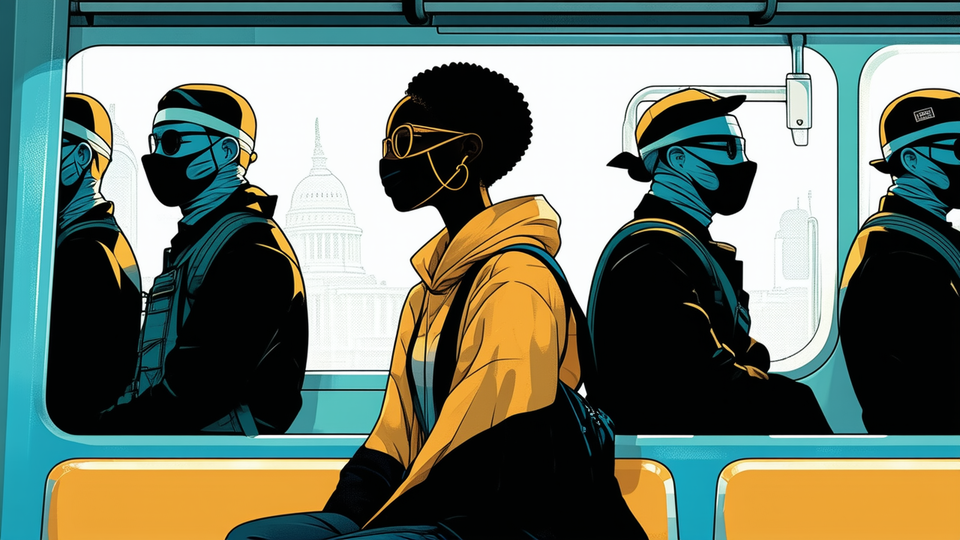
The demonstration unfolded during the nation’s 250th‑anniversary Independence Day celebrations, creating a stark visual contrast between the country’s historic symbolism of freedom and a group that openly embraces white supremacist ideology. Reuters photographers documented the scene, most notably a striking image of a Black woman seated on a Metro train surrounded by the masked demonstrators. That photograph quickly went viral, sparking widespread conversation about the presence of extremist groups in public spaces and the role of free speech in America.
Political Confrontation on CNN
Later that night, CNN’s State of the Union host Dana Bash interviewed Interior Secretary Doug Burgum, pressing him to denounce Patriot Front and its message. Bash asked, “Do you condemn this group and what they were doing, and most importantly, what they stand for?” Burgum replied, “Certainly, what they stand for is nothing that I could possibly agree with,” before emphasizing that the United States protects speech, even speech that many find reprehensible. He added, “One of the foundational principles of the United States, which makes democracy messy, is free speech.” When asked whether he would recommend President Trump publicly condemn the group, Burgum again leaned on the free‑speech argument, noting that both “the left and the right” are afforded constitutional protections.
Critics argued that Burgum’s reliance on free‑speech rhetoric amounted to a failure to unequivocally repudiate hate‑based extremism. Others defended his stance, pointing out that the First Amendment does protect even the most offensive expressions, and that government officials must tread carefully to avoid infringing on constitutional rights.
Broader Implications
The Patriot Front march highlighted ongoing challenges in confronting white nationalist groups that exploit public events to gain visibility. Law enforcement officials, including the Washington Metropolitan Police Department, monitored the demonstration but reported no arrests or immediate threats to public safety. The incident underscores a tension in American democracy: safeguarding civil liberties while confronting ideologies that threaten the nation’s inclusive values.
In the aftermath, advocacy groups and scholars emphasized the need for a clearer societal response. The Southern Poverty Law Center and the Anti‑Defamation League reiterated that Patriot Front is a hate group whose activities aim to promote a “white ethnostate,” and urged community leaders to condemn such actions unequivocally.
As the United States reflects on its 250th year of independence, the Patriot Front march serves as a reminder that the promise of liberty continues to be tested by those who seek to undermine it. The debate sparked by Burgum’s interview illustrates the ongoing struggle to balance constitutional freedoms with the imperative to denounce hate-fueled movements.