Trump's Vision for America's Next Expansion: A 250-Year Perspective
Introduction
The United States marked its 250th anniversary by reflecting on a remarkable transformation from a handful of Atlantic settlements to a continental power. Over two and a half centuries, the country expanded its geography and its population, forming the political and cultural landscape that shapes today’s debates.
Historical Growth
At the start of the Republic, the original thirteen colonies covered roughly 430,000 square miles. Successive acquisitions—such as the Louisiana Purchase of 1803 and the Oregon Territory—multiplied the nation’s footprint to about 3.7 million square miles, an eight‑fold increase. Population growth mirrored this expansion: the 1790 census counted about four million residents, while the 2025 estimate exceeds 343 million, an 8,475 percent rise.
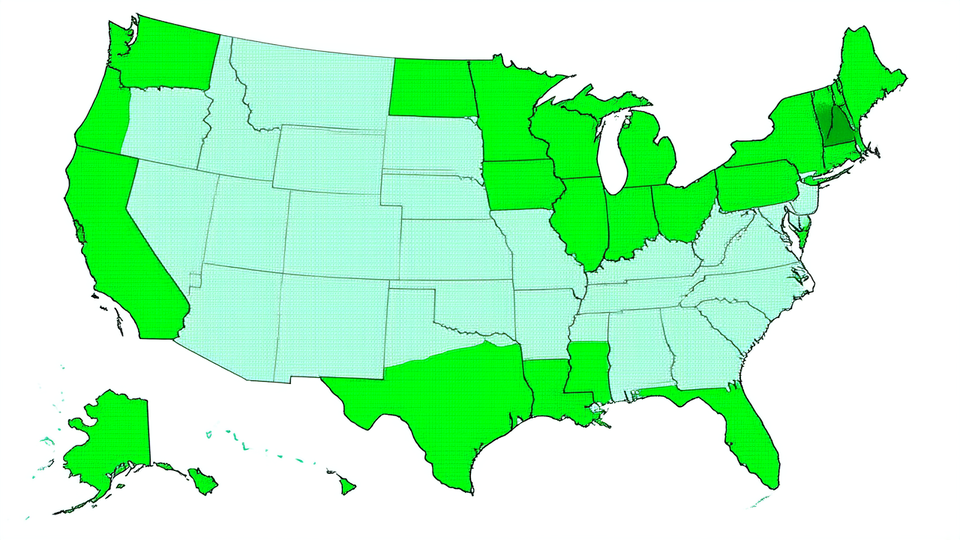
Early settlers forged distinct regional identities. The New England‑derived "Yankeeland" emerged from Puritan roots, while the central “Greater Appalachia” region drew Irish and Scots who prized individual liberty and limited government. The Deep South cultivated an oligarchic, plantation‑based society. These cultural lines still surface in modern electoral maps, dividing the nation into red‑state conservatism and blue‑state liberalism.
Immigration fueled further growth. Three major waves arrived: roughly 14 million Europeans from the 1840s to 1889, over 18 million from southern and eastern Europe between 1890 and the 1920s, and, since the 1960s, more than 70 million newcomers from Asia, Latin America, and elsewhere. Today, 14.8 percent of Americans are foreign‑born, a share matching the historical peak of 1890, and immigration accounts for 84 percent of recent population increase.
Trump’s Expansion Vision
President Donald Trump has framed his agenda as a continuation of America’s expansionist legacy, but with a modern twist. While previous centuries emphasized outward territorial growth, Trump emphasizes inward demographic control, promising mass deportations and stricter immigration limits. Simultaneously, he has revived rhetoric about acquiring new lands, citing aspirations to bring Greenland, the Panama Canal, and even parts of Canada and Venezuela under U.S. jurisdiction.
This blend of territorial ambition and population restriction echoes the early divisions identified by historians. The “Northern” states benefited from industrial‑driven immigration, whereas the “Southern” and “Western” regions have historically resisted demographic shifts that could alter political power. Trump’s platform taps into the lingering perception that America’s character is threatened by uncontrolled immigration, echoing past worries about cultural and economic impacts.
Critics argue that Trump’s vision represents a reversal of the nation’s historical trajectory, shifting from a century of expanding borders to a focus on curbing the very influx that helped build the modern United States. Supporters, however, view his stance as a protective measure to preserve the nation’s founding ideals and maintain political balance.
Conclusion
From a modest Atlantic coastline to a trans‑continental empire, the United States’ growth has been shaped by land acquisition, waves of immigration, and evolving regional identities. Trump’s current policies reflect a reinterpretation of that legacy—seeking to limit demographic change while dreaming of new territorial claims. Whether this vision will reshape America’s future remains an open question, but it undeniably ties today’s political debates to the long arc of the nation’s expansionist history.