Colorado Wildfire Tragedy Shows Fire Shelter Limits and Safety Lessons
Introduction
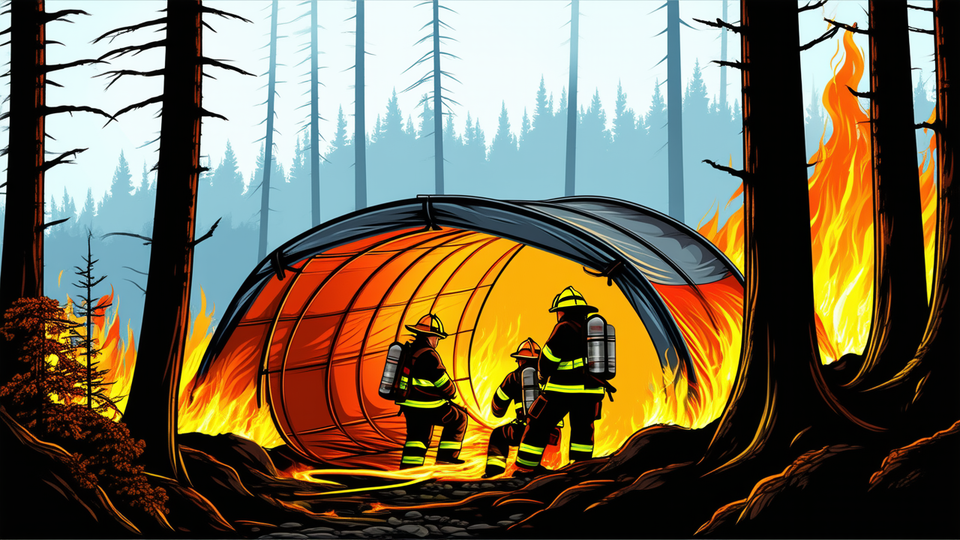
On July 2, 2026, a fast‑moving wildfire in Colorado caught a crew of five wildland firefighters off guard. When escape became impossible, each firefighter deployed a personal fire shelter—mandatory equipment designed as a last line of defense. The shelter saved two crew members, who suffered injuries, but three firefighters were overcome by heat and smoke and died.
How Fire Shelters Work
Fire shelters are constructed from layers of aluminum foil, silica fabric and fiberglass. This combination reflects heat, reduces flame penetration and traps breathable air for short periods. The shelters weigh about six pounds and are packed in a protective case inside a firefighter’s backpack. Proper deployment requires the user to remove the shelter, expand it, climb inside, and hold it down with arms, knees and feet to keep the flame and hot gases out.
Training and Deployment
Firefighters receive annual training on shelter use, often while hiking or digging fire lines. The goal is to set up a shelter in 30 seconds or less and, ideally, as early as possible when conditions become untenable. Guidance from national experts stresses that a firefighter can hold their breath for only about 15 seconds while running through flames, making rapid shelter deployment critical for survival.
Limitations and Recent Statistics
Although shelters have saved hundreds of lives over decades, they do not guarantee protection in every scenario. Their effectiveness depends on exposure time, flame intensity and the condition of the shelter—moisture, sand or debris can weaken the material. From 2021 to 2025, only four shelter deployments were recorded nationwide, two of which occurred last year in Colorado. In contrast, 2020 saw 30 deployments, mostly in California, reflecting variations in fire season severity and the number of large incidents requiring shelter use.
Future Improvements
Manufacturers have introduced modest upgrades, such as a more stable stand‑up design, a one‑piece floor, improved hold‑down handles and reduced bulk. Industry leaders say each incident prompts discussion about better materials that could withstand higher temperatures and longer exposure. Continued research and post‑incident analysis aim to refine shelter performance and training protocols.
Conclusion
The Colorado tragedy illustrates both the critical lifesaving potential of fire shelters and their inherent limits. Early escape routes, rigorous training and rapid shelter deployment remain essential. Ongoing design improvements and data‑driven safety strategies will help ensure that future crews have the best possible protection when faced with the unforgiving heat of wildland fires.