Inside Taiwan’s Nightmare Scenario: Blockade, Quake, Sabotage, and Invasion
Introduction
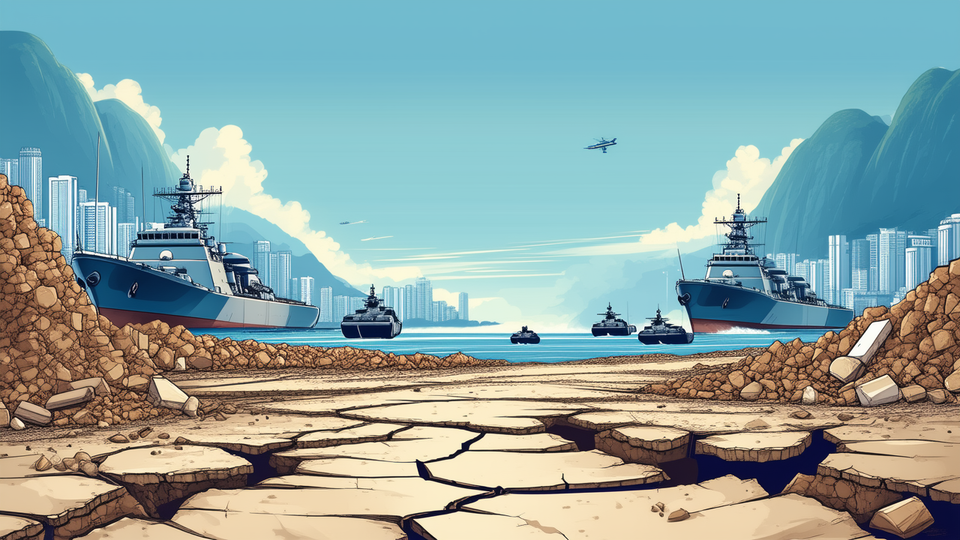
In early July 2026, Taiwan conducted a high‑stakes exercise that combined a Chinese maritime blockade, a devastating 6.8 magnitude earthquake, cyber‑physical sabotage, and a full‑scale invasion. The scenario was designed to test how government agencies, the military, and local officials could keep essential services running while defending the island against a coordinated aggressor. This drill reflects growing regional tensions and the reality that natural disasters can be weaponized.
Complex Threat Landscape
The exercise began with a seven‑hour tabletop discussion before moving to field operations. Simulated Chinese warships and aircraft encircled Taiwan, while a powerful earthquake struck central Taiwan, killing twelve people and crushing infrastructure. Simultaneously, hackers targeted government networks, and fake television broadcasts spread disinformation. The combination of physical and digital assaults forced officials to juggle disaster relief, public safety, and military response in real time.
Civil‑Military Integration
Officials in the inland county of Nantou were tasked with transforming the region into a “rear area” – a safe haven for civilians fleeing coastal attacks and a fallback zone for retreating troops. They coordinated food rations, medical supplies, and power restoration with reserve military commands. Interactive maps displayed ambulance locations, power outages, and troop movements, demonstrating the importance of seamless communication between civilian and defense sectors.
Information Warfare Defense
As part of the scenario, Chinese actors hijacked local television signals and distributed false flyers. Taiwanese leaders responded with mock press conferences to teach staff how to identify and counter misinformation. Officials emphasized the need for rapid fact‑checking and public communication to preserve societal trust during crises.
Strategic Implications
By exposing vulnerabilities in infrastructure and governance, the drill sent a clear message: Taiwan’s preparedness can deter aggression. When adversaries see a population capable of swift, coordinated response under extreme pressure, the cost of a costly war rises. The exercise also offered lessons for other nations facing the dual threat of climate‑driven disasters and geopolitical conflict.
Conclusion
The combined blockade‑earthquake‑sabotage‑invasion scenario highlighted Taiwan’s dedication to resilience. Through rigorous testing of civil‑military coordination, information security, and emergency logistics, the island demonstrated that a prepared society can withstand even the most coordinated attacks. Continued investment in such comprehensive drills will be essential for safeguarding democracy and protecting citizens against both natural and man‑made catastrophes.