Roof collapse at Peshawar private school kills at least 28, injures dozens
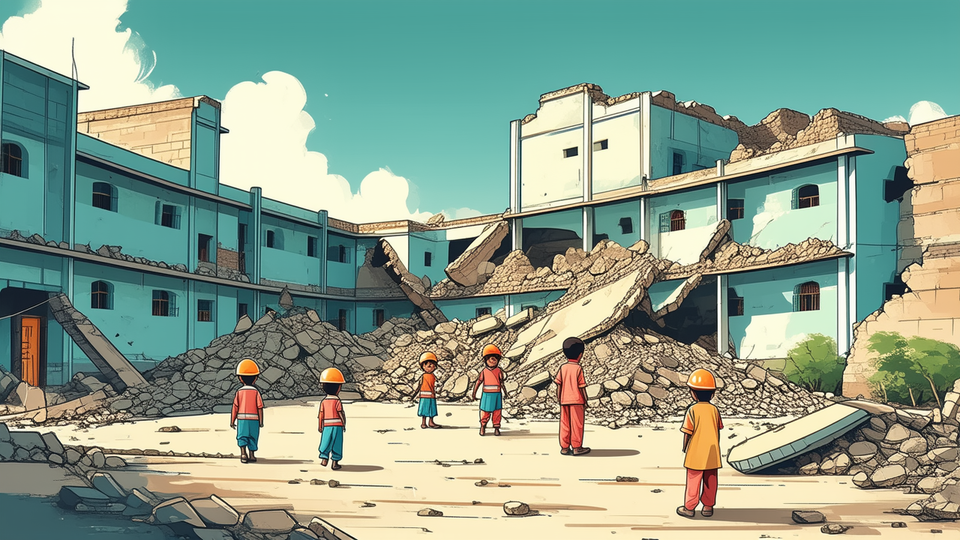
At least 28 people, including 27 children and a female teacher, died when the roof of a private school in Peshawar collapsed on Thursday, October 15, 2026, and more than three dozen were injured.
The school, located in a densely populated neighborhood of the provincial capital, was in session when the upper floor gave way, crushing classrooms on the lower level. Emergency services arrived within minutes, and rescue workers spent hours clearing debris and searching for survivors.
Hospital officials confirmed that many of the injured, some in critical condition, were younger than 13. Parents gathered outside the school and at the nearby Lady Reading Hospital, anxiously awaiting news about their children.
"Its roof was overloaded with construction on a weak structure, which caused the collapse," said Peshawar police chief Saeed Ahmed.
Police chief Ahmed also announced that the school’s owner, Mohammad Khan, had been detained pending further investigation. Khan denied negligence, attributing the failure to heavy rains that may have weakened the roof.
Authorities said the cause of the collapse is still under investigation, but initial observations point to structural weakness and possible overloading. The incident follows a pattern of building failures in Pakistan, where lax enforcement of construction standards and the use of substandard materials have made such disasters common.
Earlier in July, a tutoring centre under construction in Lahore collapsed, killing four schoolchildren, and a similar roof collapse in June claimed 14 lives. In response to the Peshawar tragedy, Khyber Pakhtunkhwa Governor Faisal Karim Kundi ordered a safety audit of all schools in the province to identify structural risks and enforce corrective measures.
While rescue operations continue and families mourn their losses, the collapse has reignited calls for stricter building code enforcement and better oversight of private educational institutions that serve Pakistan’s poorest communities.