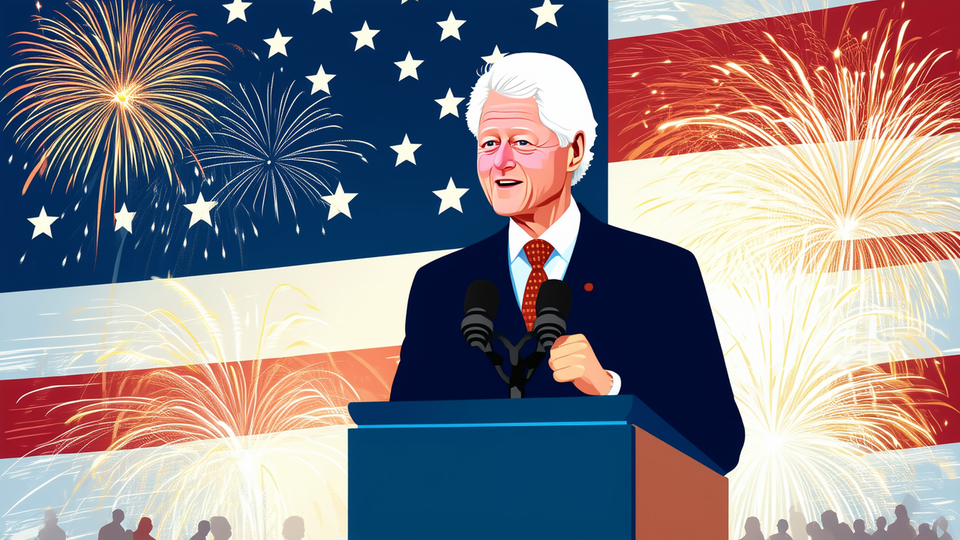
Reflecting on the 1976 U.S. Bicentennial: A Cathartic Milestone

Introduction
The United States marked its 200th birthday in 1976 with a nationwide celebration that began a decade earlier. In the wake of the Vietnam War, civil‑rights upheavals, and the Watergate scandal, the nation craved a unifying moment. President Gerald Ford’s August 9, 1974 inauguration speech declared, “Our long national nightmare is over,” framing the upcoming bicentennial as a chance to reaffirm the republic’s commitment to the rule of law.
Legacy of Unity and Reflection
Celebrations spanned the country, from a spectacular tall‑ships parade in New York Harbor—featuring sixteen historic vessels and a hundred modern boats—to state visits by Queen Elizabeth II and French President Valéry Giscard d’Estaing. In his July 4 speech, President Ford described the Declaration of Independence not as a protest against government but as a call against governmental excess, sending a coded reassurance to his party’s anti‑government critics.
Historians such as Jonathan Alter recall that the 1976 bicentennial felt “vital and happy” because Americans believed the system had rescued itself. The era’s optimism allowed for both celebration and critical reflection, with works like Alex Haley’s novel Roots receiving acclaim for confronting America’s painful histories even as the nation celebrated.
Contrast with Modern Commemorations
Later anniversaries reveal a different tone. Scholars compare the 1976 spirit to the highly partisan 250th‑anniversary events imagined under a still‑in‑office Nixon. Recent analyses suggest that contemporary presidential control over commemorations, exemplified by the current administration’s top‑down approach, mirrors Nixon’s early attempts to dominate the bicentennial planning.
Today, commentators observe a “night‑and‑day” shift: the 1976 celebrations encouraged grassroots participation, while modern national events often feel like a circus, with opponents framed as enemies rather than political rivals. Economic concerns such as 1970s stagflation are echoed in today’s inflationary pressures, yet the collective mood of renewal has faded.
Conclusion
The 1976 bicentennial offered a rare cathartic moment that reinforced belief in American institutions, reminding citizens that democratic resilience can emerge from crisis. While current commemorations may lack the same inclusive spirit, the lessons of 1976—community‑driven celebration, acknowledgment of past struggles, and faith in the rule of law—remain vital guides for nurturing national unity in uncertain times.