From Augustine to the Trump Era: Tracing the Evolution of Church‑State Separation
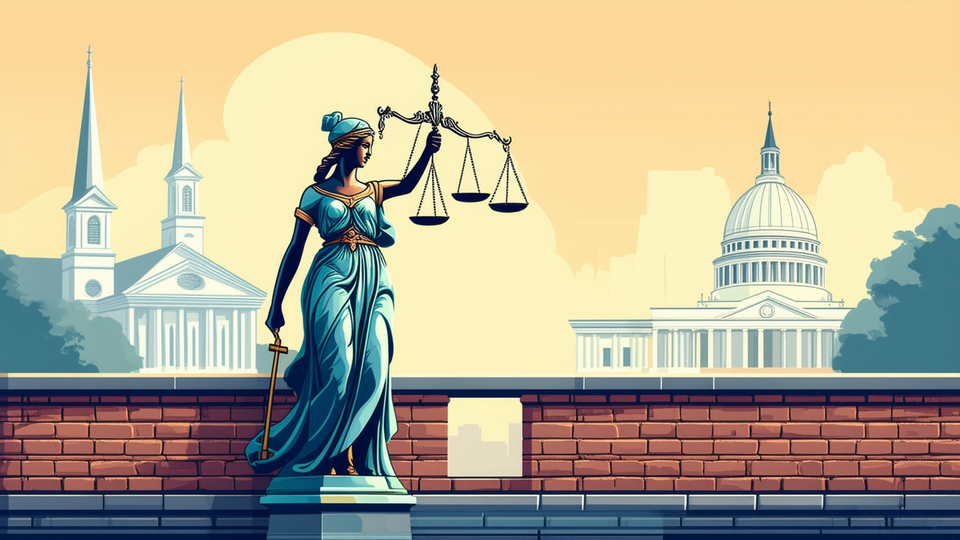
The relationship between government and religion has shaped American public life for centuries. As the nation confronts modern claims that religious liberty is under attack, understanding the long‑standing idea of church‑state separation offers essential perspective.
Historical Foundations
Early Christian thinkers already imagined distinct realms for spiritual and temporal authority. Augustine of Hippo described “two cities” – the earthly city of man and the heavenly city of God – each with its own governance. During the sixteenth‑century Reformation, Martin Luther and John Calvin echoed this split, speaking of a “spiritual kingdom” and a separate “temporal kingdom.” Anabaptist leaders such as Menno Simons emphasized a literal dividing wall to keep their communities apart from worldly corruption. In the New World, Roger Williams championed a “hedge, or wall of separation” between the garden of the church and the wilderness of the world, while Enlightenment thinkers like John Locke argued for an “absolutely separate” church that could not be controlled by civil authorities.
Foundational Documents
These ideas fed directly into the United States’ founding. The Declaration of Independence affirmed that unalienable rights – life, liberty, and the pursuit of happiness – derive from God, not government, establishing the premise that the state should not dictate religious belief. A decade later, the Constitution and its First Amendment codified this separation, stating that Congress shall make no law respecting an establishment of religion or prohibiting the free exercise thereof. The 1947 Supreme Court case Everson v. Board of Education famously invoked Jefferson’s “wall of separation” as a guiding metaphor. Later, Justice Sandra Day O’Connor underscored that this wall is essential for protecting true religious freedom for all citizens.
Modern Political Debate
In June 2026 the Trump administration’s Religious Liberty Commission released a report claiming that religious freedom faces a systematic assault and that the “wall of separation” metaphor is a “belabored” phrase without constitutional basis. The report argued that the metaphor wrongly suggests an absolute divide between church and state and called for its removal from public discourse. Public opinion, however, remains firmly supportive of the principle: recent surveys show 54 percent of Americans favor government enforcement of church‑state separation, while only 13 percent oppose it, reflecting a stable endorsement of the historic framework.
Continuing Significance
From Augustine’s theological distinction to today’s policy battles, the concept of separating church and state has consistently protected both religious liberty and democratic governance. By grounding the principle in natural rights, the Declaration and the Constitution created a durable safeguard that endures through modern political controversy. Recognizing this lineage helps explain why many Americans still view the “wall” as a vital barrier that preserves pluralism, ensures that government does not favor any faith, and allows every individual to practice belief without state interference.