Coast Guard Bars Environmental Ship from America250 Parade Over Political Banners
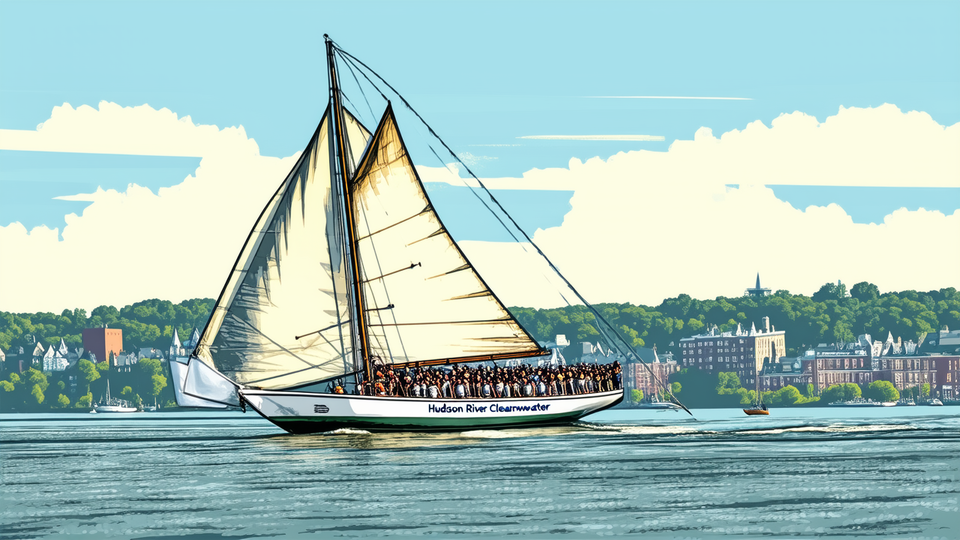
New York City – The United States Coast Guard announced on July 5, 2026 that a ship owned by the Hudson River Sloop Clearwater environmental organization was forced to leave the America250 fleet, the celebratory sailing event commemorating the nation’s 250th anniversary. The decision was made after the vessel displayed large banners that read, “Save the Clean Water Act” and “Indigenous Rights, Racial Justice, Climate Solutions.”
Officials said participants in the parade had previously agreed to refrain from displaying political or politically charged messages. In a statement, the Coast Guard said it enforced the agreement on behalf of the organizing committee, Sail4th, and offered the vessel’s owner the choice to remove the messages or exit the route. When the organization declined, the ship was redirected away from the designated sailing lane, with the agency warning that continued non‑compliance could lead to arrest.
Jennifer Benson, director of advocacy and communications at Hudson River Sloop Clearwater, disputed the Coast Guard’s characterization of the banners as political, insisting that clean‑water advocacy is a universal concern that transcends partisan lines. “We don’t feel like advocating for clean water is politically charged,” Benson asserted. “People on all sides of the aisle have been fighting for clean water in different ways.”
The incident raised broader questions about free speech in public celebrations. While the America250 parade was intended to showcase the nation’s maritime heritage, the presence of a banner on a public stage inevitably intersected with ongoing national debates over environmental regulation, indigenous sovereignty, and systemic justice. Critics of the Coast Guard’s action argue that the removal of the ship stifles legitimate civic discourse, especially on issues that directly affect the Hudson River and surrounding communities.
Supporters of the Coast Guard’s enforcement point to the importance of keeping the parade’s focus on historical commemoration and unity. They note that the event was organized under the guidance of Freedom 250, a group created during the previous administration to plan the celebrations, and that a clear set of guidelines was established to prevent any messaging that could be seen as divisive.
Legal experts highlight that the First Amendment does not guarantee unrestricted speech in every context. Public forums, especially government‑sponsored events, can impose reasonable content‑neutral restrictions to maintain order and purpose. The Coast Guard’s stance is that the banner policy was a neutral rule applied equally to all participants.
Local residents and observers expressed mixed reactions. Some praised the Coast Guard for upholding the agreed‑upon rules, while others lamented the missed opportunity for raising public awareness about pressing environmental threats to the Hudson River watershed. The debate underscores the delicate balance between celebrating national milestones and providing space for urgent civic messages.
As America marks its quarter‑century milestone, the episode serves as a reminder that the nation’s history continues to be written not only on the wave‑capped horizons of its coastlines but also in the ongoing conversations about how to protect and improve the environment for future generations.