AfD Re‑elects Leaders Amid Massive Protests and Police Clashes – July 2026
Introduction
The far‑right Alternative for Germany (AfD) convened its national congress in Erfurt, Germany, on July 4‑5, 2026. Delegates gathered to reaffirm the party’s dual leadership, re‑electing Alice Weidel and Tino Chrupalla for another two‑year term. The party presented the meeting as a demonstration of unity and a platform to project its growing political ambition.
Protests and Police Response
From the outset, the convention faced a massive wave of protest. Organisers of the opposition estimated that around 20,000 demonstrators attempted to block access roads, while police later reported that roughly 31,000 people participated in the anti‑AfD rallies. Demonstrators aimed to disrupt the venue, display banners against the party and bring attention to the AfD’s extremist reputation. Police forces from across Germany were mobilised, with several thousand officers deployed to secure the convention centre, blockades, and surrounding highways.
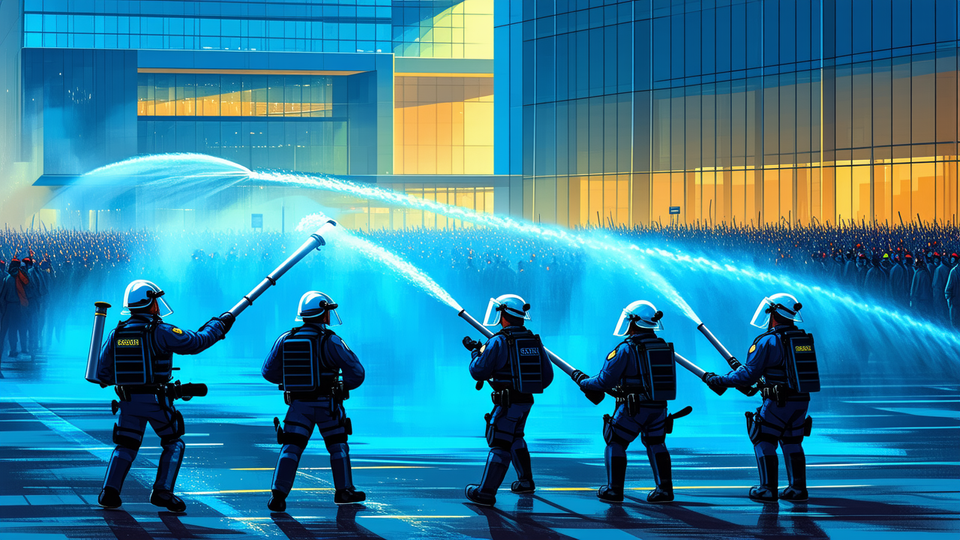
The confrontations were intense. Riot‑gear‑clad officers used water cannons and armored vehicles to clear blocked routes, and several clashes were reported as protesters attempted to breach police lines. While most incidents remained non‑lethal, the presence of force underscored the volatile atmosphere surrounding the event.
Political Context and Party Strategy
AfD’s leadership framed the gathering as a pivotal moment. Party co‑leader Alice Weidel declared 2026 a “year of destiny,” emphasizing the party’s ambition to transition from opposition to governing authority. The party highlighted its rising membership, reporting an increase to 75,000 members, up from roughly 50,000 in 2024. AfD’s electoral strategy is centred on upcoming state elections, particularly in Saxony‑Anhalt, Mecklenburg‑Vorpommern and Berlin, where it seeks to surpass the 40 % threshold and potentially form a state government.
Despite its electoral gains, the AfD remains isolated politically. All mainstream German parties have maintained a “firewall” refusing to cooperate with the AfD, citing its anti‑democratic and extremist positions, especially its anti‑migration stance. Critics argue that the party’s growing popularity is fueled by public dissatisfaction with the governing coalition, but they warn that its rhetoric continues to fanned xenophobic and illiberal sentiment.
Historical Symbolism and Public Reaction
The convention’s timing coincided with the centennial anniversary of a 1926 Nazi Party meeting held nearby, a fact that drew criticism from historians and political opponents who perceived the overlap as a stark symbolic choice. AfD dismissed the accusation, stating that the date was unrelated to its agenda.
Public reaction was sharply divided. Supporters praised the party’s resolve and viewed the police presence as an attempt to suppress legitimate dissent. Opponents, meanwhile, highlighted the scale of the protests as evidence of widespread resistance to the party’s extremist ideology and warned of the dangers of normalising such movements.
Conclusion
AfD’s re‑election of its leaders amid extensive protests underscores a pivotal juncture for the party. While it seeks to leverage growing electoral support to enter government, the massive public opposition and the firm stance of other parties reflect deep societal resistance to its far‑right agenda. The outcome of upcoming state elections will reveal whether AfD can translate its rally‑floor momentum into governing power, or if the widespread protests will curtail its ambitions.