US‑Iran Military Escalation Threatens June MoU, Raises Global Oil Risks
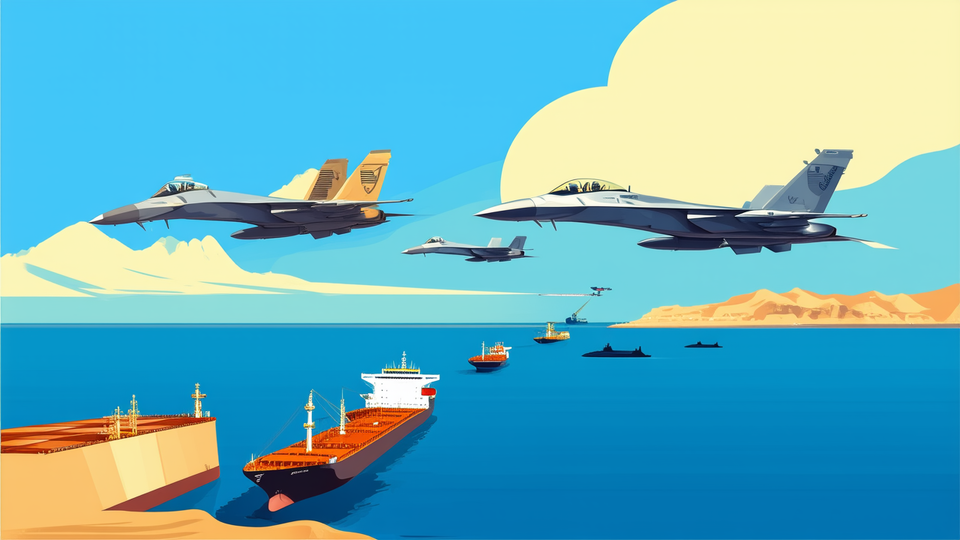
Escalating Military Actions in the Strait of Hormuz
The United States conducted air raids on Iranian missile and drone storage sites along the southern coastline, describing the strikes as a direct response to a projectile that damaged a commercial vessel near Oman. Iran, meanwhile, reported that a projectile struck a pier in Sirik, asserting that its facilities remained operational.
Iranian forces, through the Islamic Revolutionary Guard Corps, announced a retaliatory attack on U.S. military installations in the region, warning that any further aggression would elicit an even broader response. Bahrain’s foreign ministry joined the condemnation, labeling the alleged drone attack as a serious violation of sovereignty and international law.
Both governments claim the other side has violated the terms of the Memorandum of Understanding (MoU) signed on June 15. The MoU stipulates a 60‑day cease‑fire and the provision of free, uncharged passage for commercial ships through the Strait, a vital chokepoint for global energy supplies. Iran argues that U.S. strikes on its coastal facilities breach Article 1 of the agreement, while the United States cites Iranian attacks on commercial shipping as a breach of the cease‑fire.
Regional actors have responded with heightened caution. Oman announced a new southern lane for shipping that stays closer to its own coast, aiming to reduce exposure to the contested waters. Saudi Arabia and other Gulf states have called for renewed diplomatic dialogue, emphasizing the economic fallout that a prolonged closure would cause.
The renewed combat raises immediate concerns for the global oil market. Tankers en route through the Strait have reported damage, though crews remain safe. Analysts note that a disruption of even a few days could tighten global oil supplies, inflating prices and stressing economies already contending with post‑pandemic recovery.
U.S. officials, including Vice President JD Vance, have reiterated a firm stance: any violation of the MoU will be met with proportional force. Iran’s foreign ministry, meanwhile, has threatened to enforce tolls or fees for passage, a move that would further complicate the already fragile negotiation.
Stakeholders emphasize that diplomatic channels must remain open. The United Nations and several European powers have offered to facilitate communication between Washington and Tehran, urging both sides to respect the MoU’s framework while seeking a durable solution that safeguards regional stability and the uninterrupted flow of oil.