Unions Stand Firm Against Unregulated AI Ahead of 2028 Election
Union Opposition to Unchecked AI as 2028 Campaign Looms
As the 2028 presidential election approaches, the nation’s most powerful labor federations have placed artificial intelligence at the center of their agenda. Delegates at the AFL‑CIO’s recent national convention in Minneapolis sent a clear message: AI must be governed in a way that safeguards workers, not just corporations.
Union leaders highlighted the growing anxiety among workers that AI could replace jobs, erode wages, and enable invasive monitoring technologies. The rhetoric echoed a stark choice, with AFL‑CIO President Liz Shuler declaring, “You’re either with workers or you’re with millionaires.” This framing positions AI regulation as a fundamental labor issue rather than a peripheral tech debate.
While many Democratic hopefuls have begun to discuss AI policy, unions remain skeptical of vague promises. Some, like Governor Gavin Newsom’s recent executive order, were criticized as “just more research” without concrete protections. Union president Chrissy Lynch of the Massachusetts AFL‑CIO argued that robust action—not lengthy studies—is needed to protect jobs and ensure equitable access to technological benefits.
Construction unions see a unique opportunity in the development of data centers, arguing that these facilities can create well‑paid, skilled positions if built responsibly. They oppose a blanket moratorium championed by some progressive legislators, emphasizing that data centers also power hospitals and universities. The unions’ stance is that responsible development can coexist with worker protections, rather than eliminating economic growth.
Healthcare workers also voiced concerns. National Nurses United’s Jamie Brown warned that promises of AI easing workplace burdens have been hollow, noting that technology often leads to “de‑skilling” and replacement of skilled labor. The unions passed a resolution urging elected leaders to choose between supporting big‑tech profit motives or championing workers’ rights in the era of rapid AI advancement.
Political implications are significant. Polls show increasing voter anxiety about AI, pressuring both parties to clarify their positions. Some Republican candidates, including Florida Gov. Ron DeSantis and Missouri Sen. Josh Hawley, have begun to critique AI’s impact, indicating that the issue cuts across traditional partisan lines.
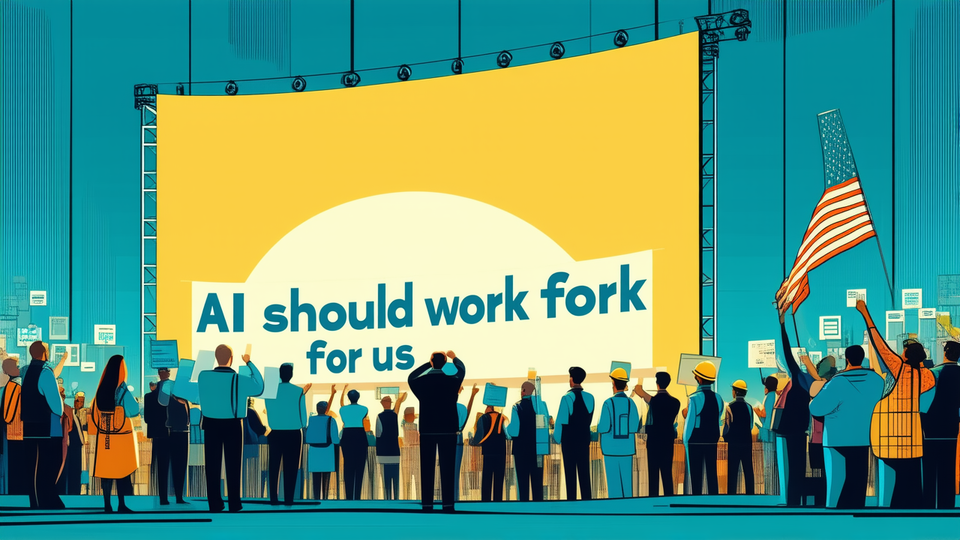
In response to the heightened focus, the AFL‑CIO deliberately kept presidential hopefuls off the convention stage to avoid politicizing the event, yet the message resonated loudly across the hall. Union leaders displayed a banner reading “AI should work for us,” reinforcing a demand for inclusive technology policy.
Looking ahead, the challenge for candidates will be to translate this union‑driven momentum into legislative action that balances innovation with worker security. The unions’ insistence on concrete regulation signals that the upcoming election could become a decisive moment for shaping America’s AI future.