Trump’s Targeted Obama Reference Sends Signal to Base – June 24, 2026
Trump’s Targeted Obama Reference Sends Signal to Base – June 24, 2026
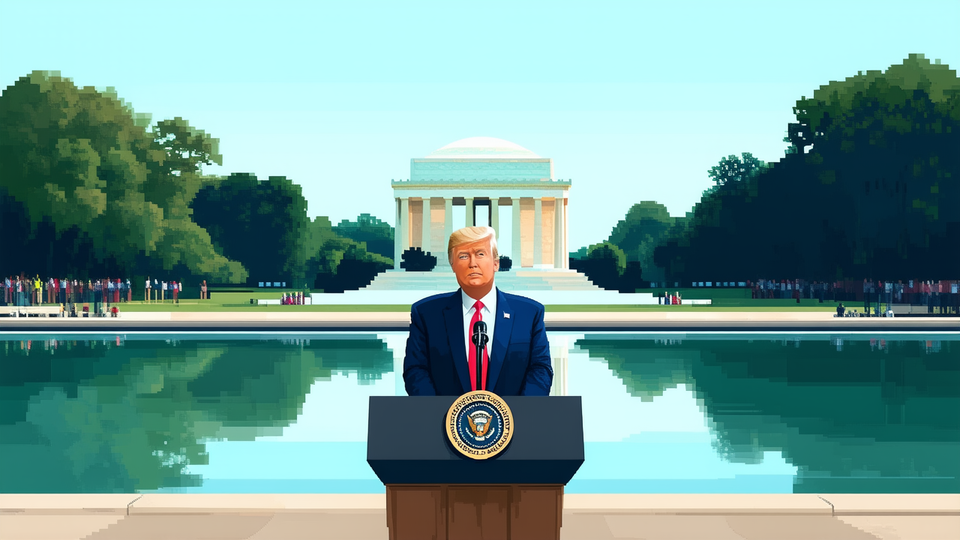
President Donald Trump addressed reporters on June 24, 2026 during a discussion about the deteriorating condition of the Lincoln Memorial Reflecting Pool. In answering a question about the pool’s timeline and costs, Trump deliberately invoked the former president by his full name, saying, “Barack Hussein Obama. Have you ever heard of him?” This phrasing stood out because it inserted Obama’s middle name, a detail rarely used in public discourse.
Political analysts quickly identified the tactic as a calculated signal to Trump’s core supporters. Communication scholar Karrin Anderson of Colorado State University explained that using Obama’s full name “functions like a dog‑whistle,” triggering negative associations for listeners who already view the former president with suspicion. Anderson noted that the middle name “Hussein” can evoke xenophobic reactions, especially among those who equate it with Islamic identity.
The comment did not arise in isolation. Earlier that week, Obama had appeared on the “All The Smoke” podcast, calling Trump’s persistent focus on him an “obsession.” Trump’s response thus positioned him as the defender against an alleged hidden influence, reinforcing the narrative that Obama continues to operate behind the scenes. This aligns with a longer pattern of Trump’s “Obama derangement syndrome,” where the former president is repeatedly cast as a political adversary whose actions affect current governance.
Experts also highlighted the broader communicative strategy at work. The repeated use of coded language, including the full name, is part of an “anti‑democratic” approach that seeks to mobilize a base by externalizing blame. Social scientists argue that this method escalates from subtle dog‑whistling to overt “howling,” where the message becomes frequent and explicit, losing subtlety but increasing rallying power among supporters.
The incident also reflects Trump’s use of visual and verbal cues to dominate media cycles. Alongside the verbal jab, Trump posted side‑by‑side images of his own youth at the New York Military Academy and a college‑age Obama smoking a cigarette. Critics pointed out factual inconsistencies in the age of Trump’s yearbook image, underscoring a pattern of leveraging personal history to draw contrasts with Obama.
Overall, the June 24 exchange illustrates how language choices can serve strategic political purposes. By invoking Obama’s middle name, Trump tapped into pre‑existing cultural narratives, reinforcing a message that resonates with his supporters while marginalizing moderate discourse. The episode underscores the potency of targeted rhetoric in contemporary American politics.