Trump's Second Term Tests the Resilience of American Democracy
Introduction
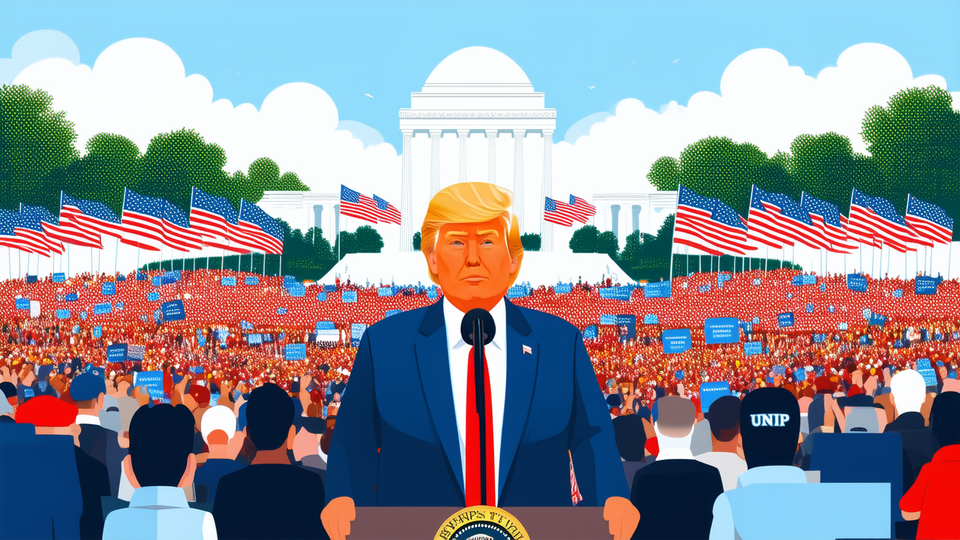
Donald Trump returned to the White House in January 2025, marking the start of a second term that has been described as both a celebration of the nation’s 250th anniversary and a profound test of its democratic foundations. From the opening rally on the National Mall to the heavy presence of his image on federal buildings, the administration’s style has evoked comparisons to monarchical rule. This context sets the stage for an analysis of how the current presidency is influencing America’s political system.
Body
Expanding Executive Power – Early in his term, President Trump nominated a personal lawyer to serve as Attorney General and ordered the Department of Justice to target political opponents. He has publicly asserted that Article II of the Constitution grants him “all of these rights at a level nobody has ever seen before,” a claim that challenges traditional checks and balances. Lawsuits that have been filed against the news media and attempts to seize control of elections illustrate a pattern of aggressive use of executive authority.
The Judicial Landscape – The Supreme Court’s conservative majority has become a critical check on the administration. In several high‑profile cases, the Court has upheld broad presidential immunity, limiting lower‑court investigations into Trump’s actions. However, the Court has also insisted that certain powers, such as global tariffs, remain with Congress, indicating that judicial oversight still functions, albeit within a narrowed scope.
Financial Conflicts of Interest – Unlike any previous president, Trump has leveraged his office to enrich his business empire. He has promoted personal cryptocurrency ventures, hosted a UFC event on the White House lawn, and directed the federal government to advertise his family’s companies. Critics argue that these actions blur the line between public duty and private gain, raising ethical concerns about the commercialization of the presidency.
Targeting Political Opponents – The Attorney General’s office has pursued former officials, including former FBI Director James Comey and New York Attorney General Letitia James, on charges that were later dismissed. The administration’s push to prosecute critics and the filing of a $10 billion lawsuit against the IRS demonstrate a willingness to weaponize legal mechanisms against perceived enemies.
Public Response and Civic Resistance – The polarization of the American public is evident in the rise of the “No Kings” movement, which draws parallels between Trump’s conduct and the monarchy that sparked the nation’s founding. Activists, historians, and ordinary citizens have organized protests and public statements, emphasizing the need to safeguard democratic norms against authoritarian tendencies.
Conclusion
President Trump’s second term has amplified long‑standing concerns about the concentration of power in the executive branch. While the judiciary continues to provide a degree of oversight, the administration’s aggressive tactics—ranging from claims of unlimited authority to personal financial enrichment—pose a substantive test for America’s democratic institutions. The nation’s response, manifested through civic activism and legal challenges, will ultimately determine whether the United States can preserve the checks and balances envisioned by its founders as it commemorates its 250th anniversary.