Trump Calls FIFA Over Balogun Red Card, Sparking Debate on Political Influence in Sports
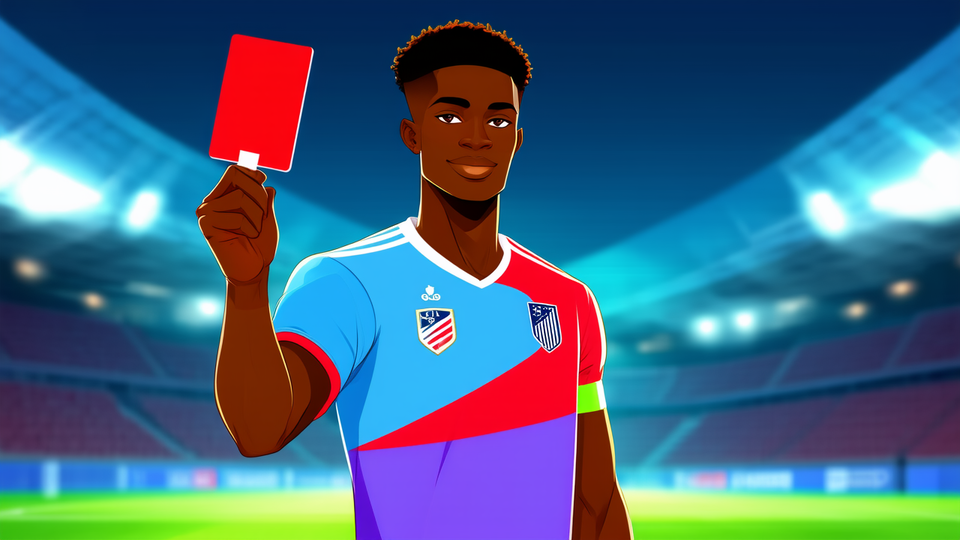
On the evening of July 6, 2026, former President Donald Trump took to social media to claim he had contacted FIFA President Gianni Infantino regarding the red card given to United States forward Folarin Balogun in the World Cup group‑stage match against Bosnia and Herzegovina. Trump argued that the collision between Balogun and Bosnia defender Tarik Muharemović was not a foul, calling the referee’s decision “very suspect” and “a great injustice.” He posted a brief message on his Truth Social account thanking FIFA for “doing what was right.”
Infantino later confirmed that he had indeed spoken with Trump, stating in a public X post, “I regularly discuss matters related to the FIFA World Cup with the President of the United States, and on this matter, I did receive a call from President Donald Trump.” He added that FIFA’s disciplinary process is independent and that any changes would be decided by the organization’s judicial bodies.
The timing of the call was critical. Balogun had been shown a straight red card in the 61st minute, a sanction that normally carries an automatic one‑match suspension for the remainder of the tournament. With the United States poised to face Belgium in a must‑win knockout match, the suspension would have sidelined the team’s leading scorer.
Following the conversation, FIFA’s Disciplinary Committee announced on July 5 that it would suspend the automatic ban for a one‑year probationary period. The decision was framed as a “suspended red‑card ban” and was met with swift criticism from UEFA, Belgium’s football federation, and a wave of fans across Europe who saw the move as political meddling.
Belgian coach Rudi Garcia denounced the ruling, stating, “This is the first time in World Cup history that a decision like this has been made. It undermines the integrity of the sport.” The Belgian Football Association filed an appeal, claiming they had not been provided with the referee’s report or the disciplinary panel’s reasoning. FIFA rejected the appeal, noting that Belgium was not a party to the disciplinary case and therefore lacked standing.
In Washington, the political fallout was equally pronounced. Secretary of State Marco Rubio defended the intervention, describing it as “the right decision” to ensure the United States fielded its best players. Meanwhile, critics in the United States warned that the president’s involvement risked politicizing sport and setting a precedent for future interference.Balogun’s performance after the suspension proved decisive. He started the match against Belgium, scoring once before the United States fell 4‑1, ending their World Cup run. The loss sparked a mixture of relief among Belgian fans and frustration among American supporters who felt the victory was tainted by off‑field maneuvering.
The episode raises broader questions about the role of political leaders in international sport governance. While FIFA regularly engages with world leaders on matters ranging from sponsorship to security, the direct request to alter a disciplinary outcome is unprecedented. Legal scholars point out that FIFA’s statutes emphasize the independence of its judicial bodies, designed to protect the sport from external pressures.
As the dust settles, both FIFA and national federations are likely to revisit their protocols for handling high‑profile appeals. The incident underscores the delicate balance between a nation’s desire for competitive advantage and the principle of fair play that underpins global sport.
For now, the Balogun saga remains a cautionary tale of how political influence can intersect with sport, prompting a reevaluation of the safeguards meant to keep the beautiful game free from external interference.