Trump Administration Accelerates $46 B ‘Smart Wall’ Construction on U.S.-Mexico Border
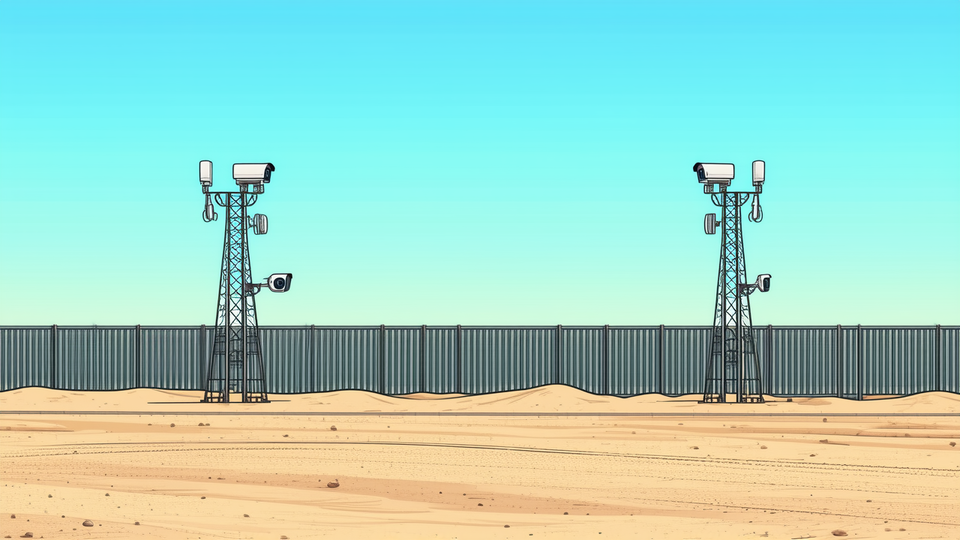
On July 2, 2026 the Department of Homeland Security announced that the Trump administration had begun an accelerated construction schedule for its long‑promised “smart wall.” Backed by a $46 billion congressional appropriation, the effort blends traditional 30‑foot steel fencing with a network of sensors, infrared cameras, radar towers and autonomous surveillance units spanning the most trafficked portions of the U.S.-Mexico border.
Funding and Timeline
Congress approved a massive infusion of cash for the project earlier this summer, allowing Customs and Border Protection (CBP) to sign contracts worth tens of billions of dollars for steel fabrication, tower installation and AI‑powered analytics platforms. Rodney Scott, CBP Commissioner, told lawmakers that the agency is already putting up an average of six miles of wall per week and expects a preliminary section to be completed “by this time next year.” As of mid‑June 2026, CBP had erected roughly 74 miles (119 km) of new fencing and plans to extend the barrier hundreds of additional miles over the coming years.
Technology at the Core
The “smart wall” concept goes beyond steel. Fixed towers equipped with video, infrared and radar can scan up to eight miles, while mobile units on trucks can be repositioned to cover gaps. Buried fiber‑optic cables and ground sensors detect movement beneath the surface, feeding data into AI systems that flag suspicious activity for agents in the field. Proponents argue this reduces the need for agents to sit in control rooms monitoring screens, freeing them for higher‑value tasks.
Criticism and Community Impact
Local residents and advocacy groups have mounted a vocal opposition. Ricky Garza, border policy counsel for the Southern Border Communities Coalition, warned that the “massive expansion of surveillance technology across the borderlands” harms communities and threatens privacy. Residents in Texas towns such as Rio Grande Valley have reported cameras and towers appearing on private land without consent, and some claim the bright lights and sensors disrupt wildlife and stargazing.
Critics also highlight that illegal crossing attempts have shrunk to their lowest levels in decades, questioning the cost‑effectiveness of the $46 billion outlay. The Electronic Frontier Foundation’s Dave Maass cautioned that AI‑driven surveillance could embed biases and increase the risk of false alarms, creating a “hostile environment” for migrants and border residents alike.
Oversight and Future Plans
The project faces scrutiny from watchdog groups such as Taxpayers for Common Sense, which urges stronger evaluation mechanisms to avoid a repeat of the failed “virtual wall” under the Obama administration. CBP officials maintain that new oversight processes are in place, but details remain sparse.
In areas of rugged terrain—approximately 535 miles (861 km) of the roughly 2,000‑mile border—no physical fence will be built. Instead, CBP plans to rely on the same sensor and tower network to monitor activity. The agency also announced the deployment of large buoy‑type barriers on the Rio Grande to deter waterborne crossings.
What Lies Ahead
As construction ramps up, the debate over border security vs. civil liberties intensifies. The smart wall could set a precedent for how technology is used in national security, but it also raises fundamental questions about the balance between safety, privacy, and the rights of communities that live in the shadow of the border.