London Court Sentences Two Romanians for Stabbing Iranian Journalist in 2024 Attack
Stabbing of Iranian Journalist in London Leads to Prison Sentences
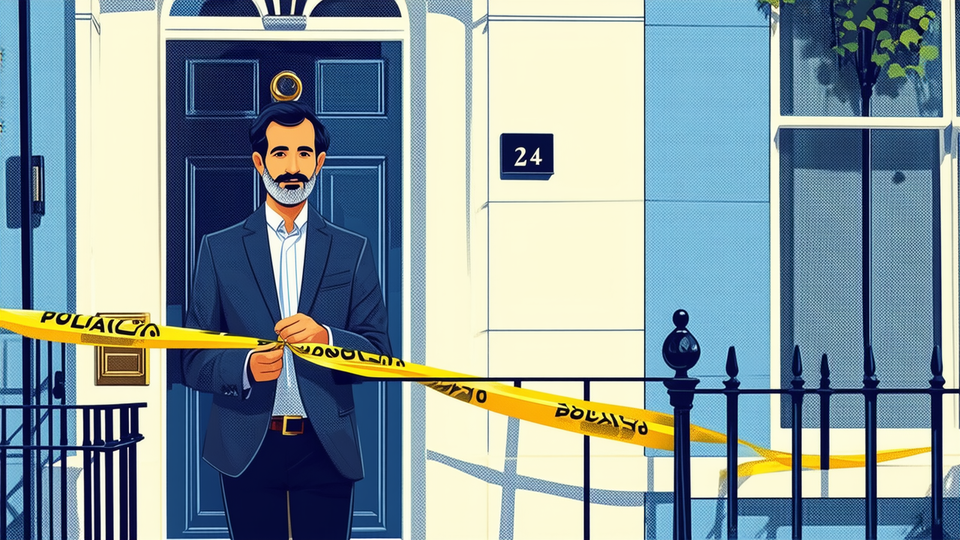
Two Romanian nationals were handed prison terms on 7 March 2026 after a jury found them guilty of wounding Pouria Zeraati, a prominent presenter for the Persian‑language channel Iran International. The attack took place in March 2024 outside Zeraati’s home in Wimbledon, London, where he was stabbed in the leg and left with serious injuries.
Judge Bobbie Cheema‑Grubb emphasised that the evidence overwhelmingly indicated the assault was conducted on behalf of the Iranian government. She stated, “I am sure that this was an attack carried out for and for the benefit of a foreign power.” The court’s finding aligns with statements from U.K. security officials who have warned of a pattern of Iranian‑backed plots targeting opposition media and diaspora communities.
The prosecution presented details of a prolonged surveillance campaign that included a billboard of Zeraati’s face in Tehran with a “Wanted: Dead or Alive” message. After the stabbing, the perpetrators fled in a blue Mazda, drove to Heathrow Airport, and ultimately left the United Kingdom. Both men were arrested in Romania in December 2024, extradited to Britain, and subsequently convicted. Nandito Badea, 21, received an eight‑year sentence, while George Stana, 25, was sentenced to twelve years.
British officials highlighted the broader significance of the case for press freedom. Chief Superintendent Kris Wright of Counter Terrorism Policing London noted that the attack was a clear example of a hostile foreign state targeting a journalist for their reporting. The sentencing sends a strong message that such intimidation will not be tolerated, and that perpetrators will face substantial legal consequences.
Iran’s senior diplomat in the United Kingdom has denied any involvement. Nonetheless, the court’s decision underscores the reality of state‑sponsored threats faced by media workers abroad. Zeraati has since returned to work, but disclosed that the incident left him “scared and anxious,” prompting him to relocate for his safety.
International partners, including the United States, have supported the U.K. investigation, reflecting growing cooperation to counter foreign‑backed intimidation campaigns. The case adds to a series of disrupted plots attributed to Iran, with U.K. intelligence reporting more than twenty such threats over the past year.
As the legal process concludes, the sentencing reinforces the principle that attacks on journalists, especially those motivated by foreign governments, will be met with decisive justice, safeguarding the essential role of a free press in democratic societies.