ICE Presence at Polling Places Raises Voter Intimidation Concerns
Introduction
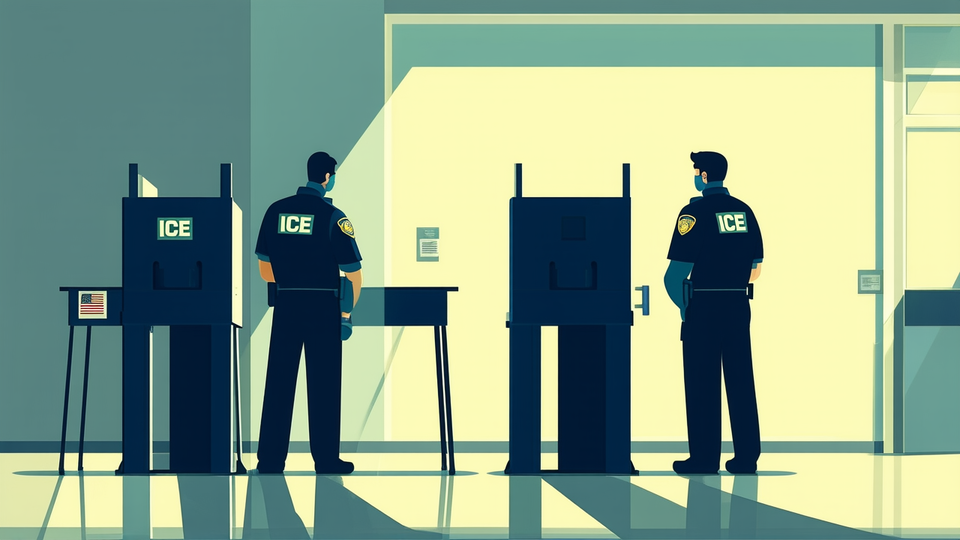
Recent public statements and an on‑the‑ground incident have brought the possibility of Immigration and Customs Enforcement (ICE) agents at polling places into sharp focus. While the Department of Homeland Security maintains that ICE involvement is limited to genuine law‑enforcement duties, the appearance of federal officers inside voting locations has sparked a national conversation about voter intimidation and constitutional rights.
Legal and Political Context
During a televised interview, Secretary Markwayne Mullin clarified that ICE would not be deployed to polling sites for voter identification purposes. He emphasized that any presence would be solely to address law‑enforcement needs, a distinction that has been scrutinized by voting‑rights advocates who argue that the mere visibility of ICE can create a chilling effect on voters, particularly immigrant communities.
In Syracuse, New York, poll worker Paigelynne Gonyea reported that two ICE officers arrived at her polling place while she was on duty. The officers presented a written notice alleging a violation of federal law related to the public posting of personal information about an ICE officer. Gonyea’s social‑media post, which featured an image of the officer and called for accountability, remained online despite the warning. The encounter was recorded by a fellow poll worker and later shared publicly.
State officials, including the New York State Board of Elections, affirmed that voting was not disrupted and that the incident did not interfere with the election process. Nonetheless, legal analysts contend that serving a warning for protected speech raises serious First Amendment concerns. The Department of Homeland Security’s characterization of the post as “doxxing” and a federal crime adds further complexity to the legal debate.
Implications for Voter Rights
The Syracuse episode illustrates how ICE activity at polling sites can be perceived as intimidation, even when intended for law‑enforcement purposes. Advocacy groups argue that such actions undermine confidence in the electoral system and threaten the fundamental right to vote without fear of retaliation. They call for clearer guidelines that restrict federal enforcement actions in polling places unless absolutely necessary.
Legislators and civil‑rights leaders have responded with calls for oversight. Representative John Mannion, for example, urged the Secretary of Homeland Security to review the incident and halt any targeting of protected speech. The broader discussion highlights a tension between national security objectives and the preservation of democratic participation.
Conclusion
As the nation approaches the midterm elections, the debate over ICE’s role at polling places underscores the importance of safeguarding voting rights while addressing legitimate law‑enforcement concerns. Transparent policies and vigilant oversight are essential to ensure that the electoral process remains free from intimidation and that all citizens can exercise their franchise without undue fear.