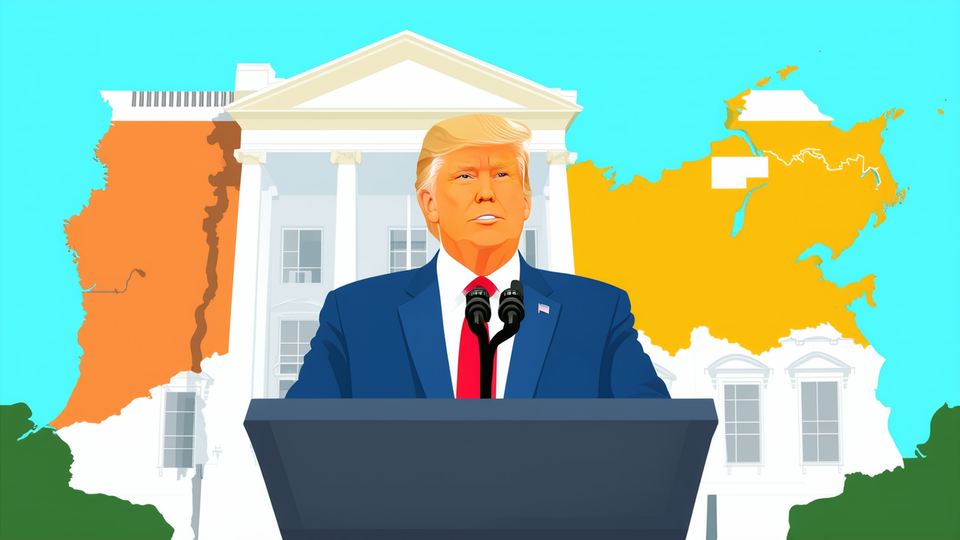
Former President Trump adopts techno‑futurist tone on AI in October 2026 opinion piece

On October 2, 2026 an opinion column observed that former President Donald Trump’s recent statements about artificial intelligence were framed in a techno‑futurist tone, a marked contrast to the language he used while in office.
The shift matters because it signals a new rhetorical approach that could influence public perception of AI and reinforce a policy narrative that emphasizes American technological supremacy. By presenting AI as a frontier to be conquered rather than a threat to be feared, Trump’s comments may reshape how voters and policymakers view the technology’s role in national security and economic growth.
In recent remarks, Trump asserted that the United States must lead in AI development, describing the nation’s role as clearing government roadblocks for innovators while demanding full corporate transparency. He also rejected any joint U.S.–China AI ventures, insisting that America should protect its technological superiority rather than share it with a strategic rival.
The opinion piece cited these positions to illustrate how Trump’s current framing diverges from his earlier, more conventional political rhetoric. While he has long championed a strong national stance on innovation, the recent language adopts a forward‑looking, almost visionary tone that portrays AI as a superintelligence to be harnessed for America’s benefit.
Analysts noted that the techno‑futurist framing could have broader implications for public discourse. By emphasizing leadership and removal of regulatory hurdles, Trump’s narrative may encourage greater private‑sector investment and bolster confidence in U.S. AI initiatives. At the same time, it underscores a hardening stance toward Chinese AI models, echoing concerns about foreign dominance in the field.
Critics have previously highlighted Trump’s willingness to challenge regulatory approaches, but the new rhetoric amplifies his commitment to aggressive innovation policy. The article concludes that this rhetorical shift is noteworthy for its potential to reshape how Americans understand and engage with emerging AI technologies.