DOE secures $150 million for Alaska's Beluga‑Healy transmission line
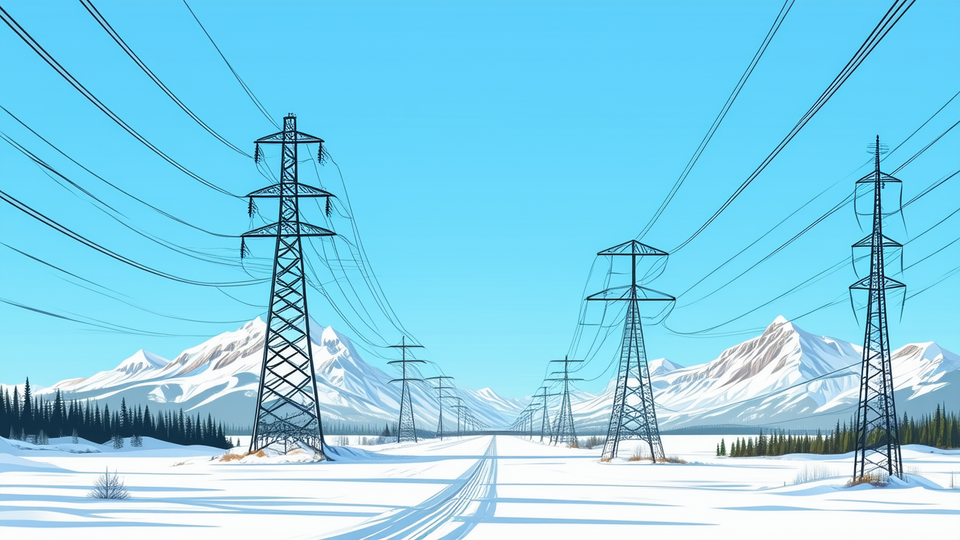
U.S. Energy Secretary Chris Wright announced on Oct. 6, 2026 that the Department of Energy will provide up to $150 million in Defense Production Act funding for the Beluga‑Healy Transmission Project, a $418 million, 223‑mile, 230‑kilovolt line linking the Beluga and Healy substations in Alaska.
The financing adds a second high‑voltage corridor alongside the existing Railbelt grid, a move aimed at bolstering reliability and redundancy for civilian customers and for the four major military installations that rely on the line.
According to the department, the new corridor will run from the Beluga substation through West Susitna, pass the town of Willow, and tie into existing infrastructure at Healy. It will also integrate with the Alaska Energy Authority’s Cook Inlet PowerLink project, which seeks to improve transmission between the Kenai Peninsula and Anchorage.
“Supporting improvements to Alaska's transmission infrastructure with Defense Production Act funds reflects the Trump administration's commitment to strengthening national security, improving grid reliability, and lowering electricity costs,” Wright said.
Earlier in the week, Vice President JD Vance highlighted a complementary $400 million federal investment in Alaska’s power grid, calling the effort an “Alaska Railbelt Transmission Project” and linking it to the Beluga‑Healy line. “Today, we’re taking another major step towards making that promise of energy dominance a reality,” Vance told a crowd in Anchorage.
Senator Dan Sullivan, who has advocated for the project, praised the partnership with the Energy Department, noting that the line “will also lay the groundwork to integrate new power sources … making Alaska’s energy future more resilient up and down the Railbelt.” Sen. Lisa Murkowski added that the project “will help facilitate new generation and strengthen reliability by creating a second pathway to move power across the Railbelt.”
The upgrades are expected to serve roughly 75 percent of Alaska’s population and enhance the power supply to Joint Base Elmendorf‑Richardson, Fort Wainwright, and two other strategic installations, addressing long‑standing concerns that the state’s grid functions more like a single “extension cord” than a modern, interconnected network.
Department officials said the funding will be disbursed as the project moves through design and permitting phases, with construction slated to begin later this year pending final approvals.