Democratic Party’s Israel‑Gaza divide sharpened on Oct. 7 anniversary, could steer 2028 primary
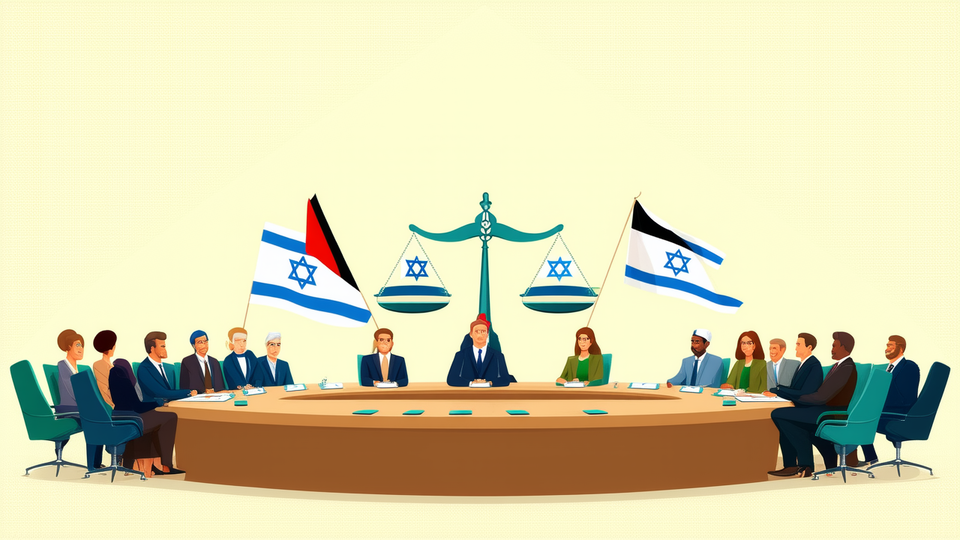
On Oct. 7, 2023 – the day Hamas launched its deadliest attack on Israel – the Democratic Party’s internal debate over U.S. military aid to Israel and Palestinian rights resurfaced, and analysts say the discussion could become a defining issue in the 2028 presidential primary.
The timing matters because the anniversary coincides with a wave of candidate announcements and fundraising efforts, forcing prospective nominees to articulate how they will balance support for Israel’s security with calls for Palestinian self‑determination. The outcome could reshape the coalition of Jewish, Arab‑American, progressive and moderate voters that Democratic candidates must assemble.
Former Chicago mayor Rahm Emanuel, who is weighing a 2028 bid, told reporters the nation is ready to elect its first Jewish president, but warned that Democrats who seek to cut military aid to Israel must also present a broader Middle‑East strategy. Governor Josh Shapiro of Pennsylvania, a prominent Jewish Democrat and staunch Israel supporter, highlighted the issue while debating his Republican opponent on the same anniversary, underscoring how the topic is already entering campaign narratives.
At the opposite end of the spectrum, Michigan Senate nominee Abdul el Sayed has faced sustained pressure from Jewish leaders over his stance on U.S. aid to Israel, illustrating how the debate is already influencing down‑ballot races. Analysts note that the “Uncommitted Movement,” a coalition of Arab‑American voters dissatisfied with the Biden administration’s handling of the conflict, refused to back former Vice President Kamala Harris in 2024, a factor that many believe cost her crucial swing‑state support.
Geopolitical analyst Irina Tsukerman described Israel as a “real fault line” inside the party, citing younger Democrats, Arab and Muslim voters, and progressive organizations that now make arms‑sales policy a primary‑season issue. Political commentator Dave Spencer echoed that sentiment, calling the topic a fault line for the party’s progressive and socialist wing, while noting that many Democrats who remain pro‑Israel are increasingly critical of Prime Minister Benjamin Netanyahu.
Michael Fahey argued that the Oct. 7 attacks have fundamentally reshaped Democratic politics on Israel, especially among younger and more progressive voters. He warned that any 2028 candidate will need to acknowledge the coalition’s diversity – Jewish voters, Arab‑American and Muslim voters, progressives and moderates – and propose a nuanced policy rather than a blanket “pro‑Israel” or “anti‑Israel” stance.
Regional variation adds another layer of complexity. In Michigan, where el Sayed is campaigning, organized pressure over Gaza is intense, whereas candidates in other states may face less direct scrutiny. New York City Mayor Zohran Mamdani has tried to separate criticism of Israel from antisemitism, even as Israel’s consul invited him to view a documentary on the Oct. 7 attacks.
The debate is likely to intensify as Democrats prepare for upcoming primary debates and fundraising cycles. Candidates who can articulate a policy that supports Israel’s security while addressing Palestinian rights and conditioning U.S. aid may gain an edge in a party increasingly split over the issue.