Congressional Review of the 2026 Iran Conflict: Accountability and Cost
Introduction
In June 2026 the United States concluded a four‑month military operation against Iran, a conflict that began without a formal congressional authorization. The war, driven by President Donald Trump’s strategic decisions, left a legacy of lost lives, billions in spending, and unanswered questions about national security. As the dust settles, members of Congress must confront the consequences of a war that proceeded under uncertain legal footing.
Congressional Oversight and Policy Debates
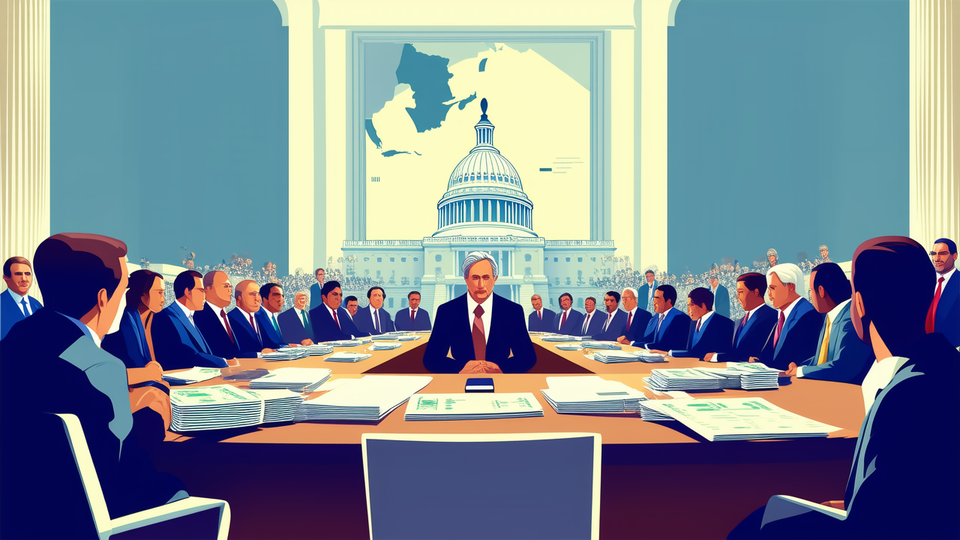
Senators from both parties voiced strong criticism. Democratic Senator Chris Coons labeled the effort “pathetic” and highlighted a “flawed strategic vision,” while Republican Senator Ron Johnson argued that the United States is now “safer.” The Senate’s attempt to assert its war‑powers authority resulted in a narrow 50‑48 vote directing the President to withdraw forces, a decision that was quickly undermined when the administration ruled the resolution a “meaningless” concurrent resolution lacking legal force. A subsequent vote on a parallel resolution failed 47‑50‑1, underscoring the difficulty of using congressional majorities alone to halt hostilities once a president declares a conflict.
The episode revives the debate over the War Powers Resolution of 1973, enacted after Vietnam to require joint congressional and executive judgment before sustained military action. The law’s Section 5(b) mandates a 60‑day limit on hostilities without congressional approval, yet past presidents—including President Trump—have routinely ignored this constraint. The Supreme Court’s removal of the legislative veto further weakened congressional leverage, allowing a president to veto any joint resolution that seeks to end a war. The recent Iran conflict demonstrates how these legal gaps enable a single executive to conduct extended military operations with limited oversight.
Budgetary and Strategic Implications
The financial dimension of the war adds urgency to the oversight discussion. The Defense Department, under Secretary Pete Hegseth, asked for an additional $1.5 trillion in the fiscal year budget, a request that would more than double the prior year’s defense spending. Republicans have debated a comparable $350 billion “plus‑up” that mirrors the president’s request, while also proposing to withhold a portion of the Pentagon’s travel fund until detailed reports—such as the investigation into the elementary‑school strike that killed over 165 civilians—are completed.
Lawmakers also questioned the $300 billion reconstruction fund earmarked for Iran, noting that it dwarfs the $1.7 billion allocation in the earlier Obama‑era nuclear deal. Critics warned that large, unconditional cash flows could repeat past patterns where financial aid was used as leverage without clear accountability. The budgetary strain highlights the broader issue of funding wars that lack clear congressional endorsement, raising concerns about fiscal responsibility and the long‑term economic impact on taxpayers.
Conclusion
The 2026 Iran conflict exposes enduring weaknesses in the United States’ war‑powers framework. Congressional attempts to restrain the President’s actions were hampered by procedural limitations and political divisions, leaving the nation to shoulder the costs of a war it did not formally approve. As legislators evaluate the human, strategic, and financial legacy of the conflict, many call for reforms that tie funding to explicit congressional authorization. Strengthening these checks could ensure future military engagements reflect both constitutional intent and the public’s interest, preventing a repeat of the accountability gaps seen in this recent episode.