California voters approve Proposition 50, reshaping congressional map for 2026 elections
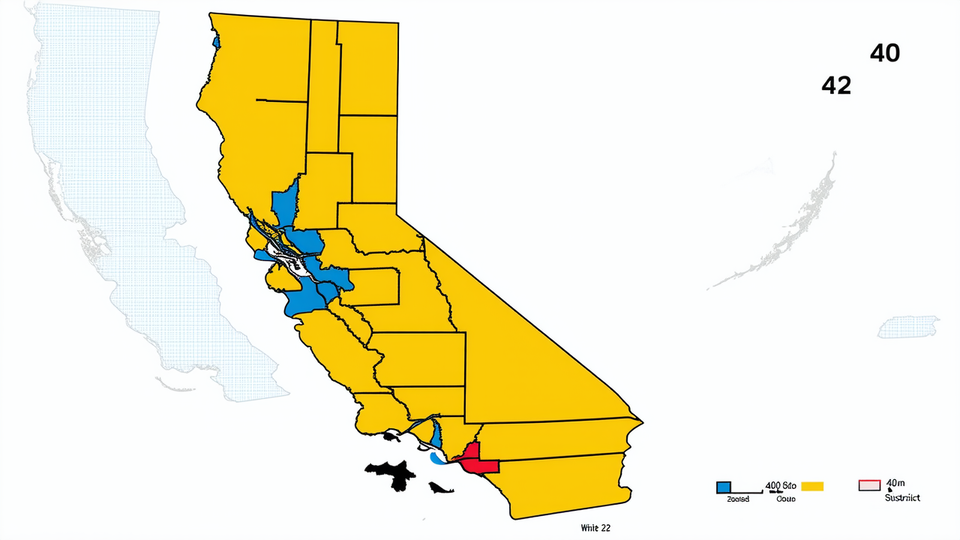
California voters approved Proposition 50 in the November 2025 election, authorizing a statewide redrawing of congressional districts that could create as many as four additional seats for Democrats in the U.S. House of Representatives.
The measure’s passage is expected to influence control of the House in the 2026 midterm elections, as the new districts will be drawn through 2030 and could tilt the partisan balance in a state that already leans Democratic.
Proposition 50 directs the state’s redistricting commission to add new districts in areas where demographic shifts favor Democratic candidates, with the goal of increasing the party’s representation at the federal level. Officials say the plan will be implemented ahead of the next congressional cycle, giving candidates time to adjust their campaigns.
In the newly drawn 22nd District, incumbent Republican Rep. David Valadao (R‑Hanford) faces Democrat Randy Villegas. Villegas, who defeated Jasmeet Baines in the primary, is calling for a progressive income‑tax structure and a federal gas‑tax suspension to ease the burden of $6.23‑per‑gallon gasoline prices in California. Valadao, who has not responded to interview requests, is backed by $4.9 million in campaign contributions, while Villegas has raised $2.6 million.
The 40th District now pits two incumbent Republicans against each other: Rep. Ken Calvert (R‑Corona) and Rep. Young Kim (R‑Anaheim). Both candidates cite infrastructure achievements, but Calvert emphasizes his record of securing over $1 billion for local projects, while Kim focuses on lowering gas and grocery costs. Calvert’s campaign holds $6.1 million, compared with Kim’s $8.8 million, reflecting a competitive fundraising landscape.
In the 41st District, Democrat Rep. Linda Sanchez (D‑Whittier) squares off with Republican Mitch Clemmons, a small‑business owner turned candidate. Clemmons argues for reduced taxes and fewer regulations, while Sanchez pushes for ending recent tariff policies and proposes the Strengthening Social Security Act to raise payroll taxes on high earners. Sanchez’s campaign out‑spends Clemmons by $1.6 million, underscoring the financial disparity in the race.
Beyond individual contests, the redistricting effort follows a broader context of high fuel costs—averaging $6.23 per gallon in California versus a $4.33 national average—and a diverse electorate, as the 22nd District’s foreign‑born population stands at 27.6 percent, nearly double the national rate. These factors are shaping voter priorities around affordability, immigration reform and economic policy.
With primary filing deadlines approaching, candidates are retooling their messages to align with the new district boundaries. Political analysts anticipate that the additional Democratic seats carved out by Proposition 50 could prove decisive in a closely divided House, making the 2026 midterms a focal point for national attention on California’s evolving political landscape.