Air Force Major Arrested on Capitol Steps After Calling for Trump Impeachment
Air Force Major Arrested on Capitol Steps After Calling for Trump Impeachment
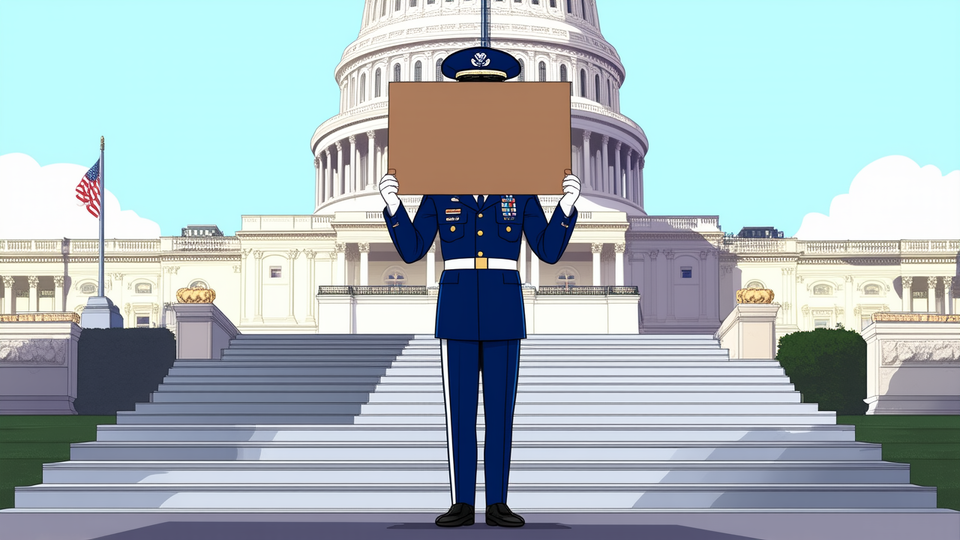
On July 2, 2026, a U.S. Air Force major identified as Jason Watson stepped onto the House steps of the U.S. Capitol to deliver a public speech. In his remarks, Watson called for the impeachment and removal of President Donald Trump and Vice President JD Vance, citing what he described as constitutional violations stemming from recent foreign military actions and domestic immigration enforcement policies.
Watson appeared in his military uniform and was accompanied by a news conference organized by the activist group Removal Coalition. He criticized the Trump administration’s decisions regarding Venezuela, Iran, and immigration, arguing that these actions breached the War Powers Clause and other constitutional provisions. The speech was brief, lasting roughly a minute, during which Watson held a sign that read “Impeach Convict Remove.”
After delivering his remarks, Watson was escorted off the steps by members of Congress. Representative Al Green of Texas, who had escorted Watson to the steps, left the area, prompting Capitol Police to give Watson a lawful order to cease his demonstration. When Watson refused, police placed him under arrest under 22‑1307 for “crowding, obstructing, and incommoding.” Police clarified that other parts of the Capitol grounds allow demonstrations, but the House steps require a member of Congress to accompany the protester.
Following the arrest, the District of Columbia Superior Court indicated that no charges would be filed against Watson, and he was subsequently released. The U.S. Air Force has not confirmed Watson’s active‑duty status, and the Department of Defense has not released a statement regarding any administrative action. Under the Uniform Code of Military Justice, active‑duty personnel are prohibited from wearing their uniform during partisan political activities and from making contemptuous statements against the President, Vice President, or Congress, as outlined in Article 88.
The incident sparked a mix of reactions. Supporters of Watson praised his willingness to speak out, with Rep. Al Green highlighting the significance of a service member demanding accountability from elected officials. Critics emphasized the importance of military discipline and the legal restrictions that govern uniformed personnel’s conduct, warning that such actions could undermine the apolitical nature of the armed forces.
Watson’s arrest underscores a broader conversation about the balance between constitutional free‑speech rights and the obligations of service members under the Uniform Code of Military Justice. While the legal outcome in this case resulted in no prosecution, the event raises important questions about how the military addresses political expression, especially when it intersects with public protests at the nation’s Capitol.