White House taps FTC as AI enforcement bulldog to safeguard U.S. strategic dominance
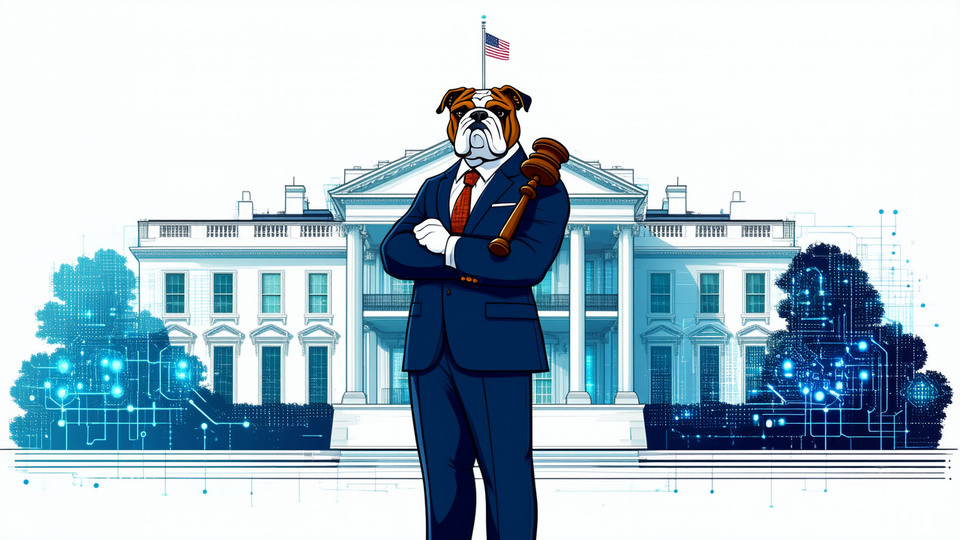
The White House announced on Oct. 17, 2026 that the Federal Trade Commission will act as the chief enforcer of artificial intelligence regulations, describing the agency as a bulldog for AI enforcement.
The designation is intended to protect the United States’ strategic AI dominance by granting the FTC authority to pursue antitrust and consumer‑protection actions against AI developers and, if necessary, halt the release of new models that pose risks to the public.
White House AI czar and Director of National Intelligence Jay Clayton told CNBC’s “Squawk Box” that the FTC can prevent the release of AI or so‑called super‑intelligence (SI) models when bad practices are identified. He affirmed that “the short answer… is yes, absolutely,” citing subpoenas issued to OpenAI and Anthropic as evidence of vigorous enforcement.
FTC Chairman Andrew Ferguson was named to lead the law‑enforcement and consumer‑protection coordination committee, a key component of the White House AI task force. In a statement, FTC director of public affairs Joe Simonson said Ferguson was honored to work alongside an “outstanding team” to ensure the U.S. maintains its super‑intelligence dominance while protecting Americans.
The agency has already issued civil investigative demands to Anthropic and OpenAI, seeking internal records on model security incidents, safeguards, advertising practices and user‑privacy policies. Those demands illustrate the FTC’s willingness to scrutinize AI firms for misleading or unsafe behavior.
Other members of the Super Intelligence Force—including Vice President JD Vance, Treasury Secretary Scott Bessent and OSTP Director Michael Krastios—will coordinate with the FTC, the Justice Department and state regulators to shape enforcement protocols and encourage voluntary reporting of security breaches.
FTC Chairman Ferguson has argued that AI developers should be held liable for the conduct of their agents and has signaled a readiness to act against companies that fail to disclose security incidents. The task force’s next steps include extending investigations to additional AI firms, such as the research group METR, and continuing to develop reporting frameworks for cybersecurity issues.