

Venezuela Earthquake Death Toll Reaches 188 with Thousands Injured and Missing
Venezuela Earthquake Casualties and Ongoing Rescue Efforts
A devastating pair of earthquakes struck Venezuela on the evening of June 24, 2026, killing at least 188 people, wounding 1,520, and leaving 157 individuals unaccounted for. According to the National Assembly President Jorge Rodríguez, more than 200 people remain trapped beneath the rubble of roughly 250 collapsed structures. The first tremor, a magnitude 7.2 quake, hit at 6:04 p.m. local time, followed 39 seconds later by a stronger 7.5‑magnitude shock, both centered near the northern coast east of Caracas.
The seismic activity devastated coastal towns such as La Guira in La Guaira state, where entire residential blocks were flattened. Caracas and its surrounding municipalities, including Chacao, Altamira, and La California, suffered extensive damage as well. Residents described the ground shaking like a locomotive, with concrete and brick raining down. Survivors recounted hearing walls collapse, dust filling the air, and the sound of breaking glass.
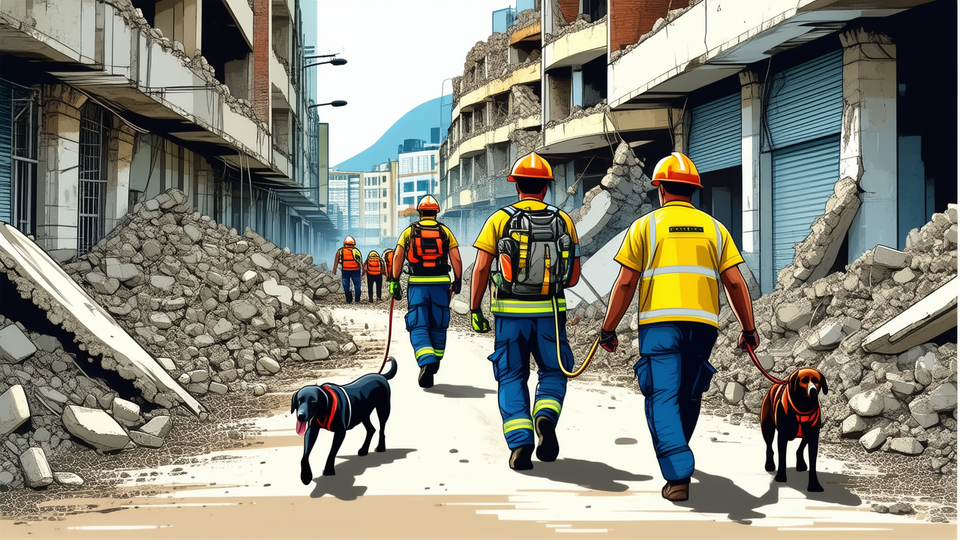
Rescue teams have mobilized from multiple nations. The United States deployed two urban search‑and‑rescue units from Fairfax County, Virginia, and Los Angeles County, California. Fairfax County sent 80 personnel, six trained dogs, and more than 70,000 pounds of heavy‑breaching equipment, including structural specialists and medical staff. Additional aid is forthcoming from the United Nations and neighboring countries such as Qatar, Mexico, China, Argentina, and Brazil.
Health facilities in Venezuela were already strained before the disaster. Public health expert Marino González warned that hospitals, suffering from years of neglect, are ill‑prepared for a surge of trauma patients. The lack of functional equipment and limited supplies complicates treatment for the injured, reinforcing the urgent need for international medical assistance.
Personal stories illustrate the human toll. Billy Ebrin, a survivor who took shelter under a doorframe, described the experience as “truly terrifying.” He fled to the ground floor, witnessed crowds of displaced residents—some even in underwear—rushing through the streets, and spent the night in his car out of fear of returning to his damaged apartment. In Caracas, Maria Gonzalez, a 52‑year‑old resident, clung to a doorway as the building trembled, later seeking refuge in the open Plaza Altamira until aftershocks subsided. Alejandro San Cristobal, who was walking on Sucre Street, threw himself into the middle of the road to avoid collapsing structures.
Authorities, led by Acting President Delcy Rodríguez, declared a “disaster zone” and pledged a $200 million reconstruction fund targeting homes and hospitals. The government is coordinating with local civil‑defense teams to search for survivors, while engineers assess the structural integrity of damaged buildings before allowing residents to return.
The earthquake’s magnitude places it among the strongest recorded in South America in a century, prompting the U.S. Geological Survey to estimate a 44 % chance that fatalities could exceed 10,000 and a 30 % chance of over 100,000 injuries if aftershocks continue. Ongoing tremors underscore the importance of resilient construction practices and community preparedness.
As rescue crews continue to lift debris, locate survivors, and provide emergency care, the international community’s rapid response offers a hopeful sign that lives can still be saved. The tragedy also highlights the critical role of coordinated humanitarian aid, robust health systems, and infrastructure designed to withstand seismic events.





