U.S. Navy asks Congress for $65.8 billion shipbuilding boost to narrow China gap
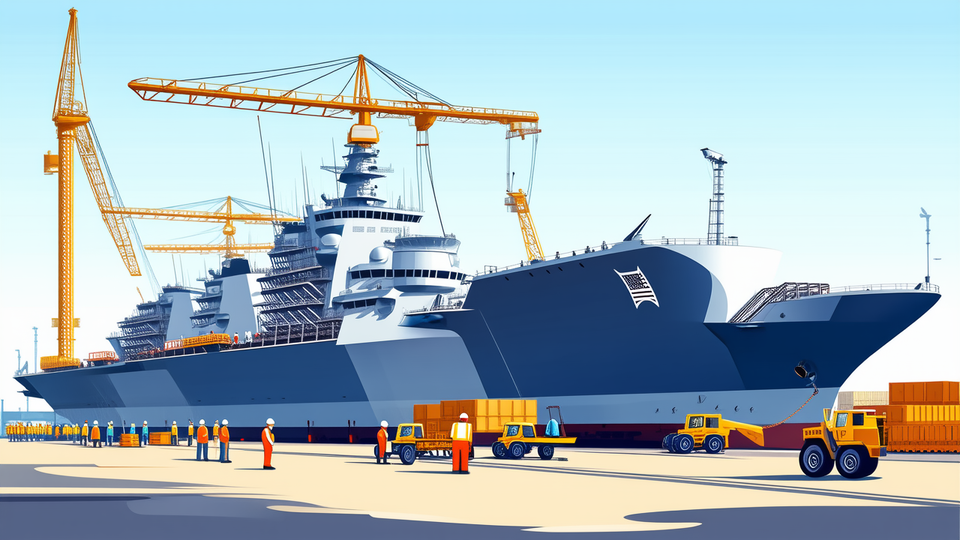
On Oct. 10, 2026 the U.S. Navy announced a request for $65.8 billion in shipbuilding funding for fiscal year 2027, aiming to close a production gap with China that national‑security officials say threatens America’s maritime superiority.
China’s commercial shipyards deliver roughly 1,700 vessels annually, while U.S. yards produce about five, a disparity the Navy describes as a national‑security threat. The funding request, more than double the amount President Biden sought in his final year, would support new ship construction, upgrades to existing platforms, and a 15‑ship battleship program projected to cost $275 billion.
The request follows a 2025 executive order signed by President Trump to rebuild the maritime industrial base. The order directs a Maritime Action Plan that includes incentives for shipyard investment, expanded workforce training, and regulatory reforms. To meet the ambitious FY 2027 goals, the Navy plans to partner with South Korea— the world’s second‑largest shipbuilder— and to expand capacity at at least seven domestic yards.
Industry bottlenecks remain severe. The shipbuilding sector lacks roughly 250,000 skilled workers, and training 200 apprentices costs more than $3 million. Harsh working conditions, high hourly pay, and frequent design changes add months and tens of millions of dollars to programs. Building a ship in the United States costs four to five times more than constructing the same vessel in China or South Korea.
Union contracts in California and Maine have recently secured higher wages, better benefits, and greater input on technology adoption. At Huntington Ingalls Industries’ Ingalls Shipbuilding division, workers earned an immediate base‑wage increase of at least 18%, with total raises of 35% to 47% through 2031. Similar gains were reported at NASSCO, where union membership rose from 21% to 67% after negotiations.
The Navy is also introducing artificial intelligence and robotics to automate labor‑intensive tasks, hoping to offset workforce shortages and accelerate production schedules. A Maine contract formalizes early worker onboarding as new technologies arrive.
Historically, the United States surged ship production during World War II, launching more than 1,900 ships per year after a $900 million investment in 1941 (about $20 billion today). After the war, federal support declined, and subsidies ended in 1981. Since 2000, China has captured more than 53% of global ship tonnage, prompting renewed focus on American shipbuilding capacity.
Congress will review the Navy’s $65.8 billion request in the coming weeks, a decision that could reshape the nation’s maritime industrial landscape and its ability to contend with China’s expanding fleet.