Trump’s Unfounded Claim of 422,000 Attendees at July 4 Salute to America Event
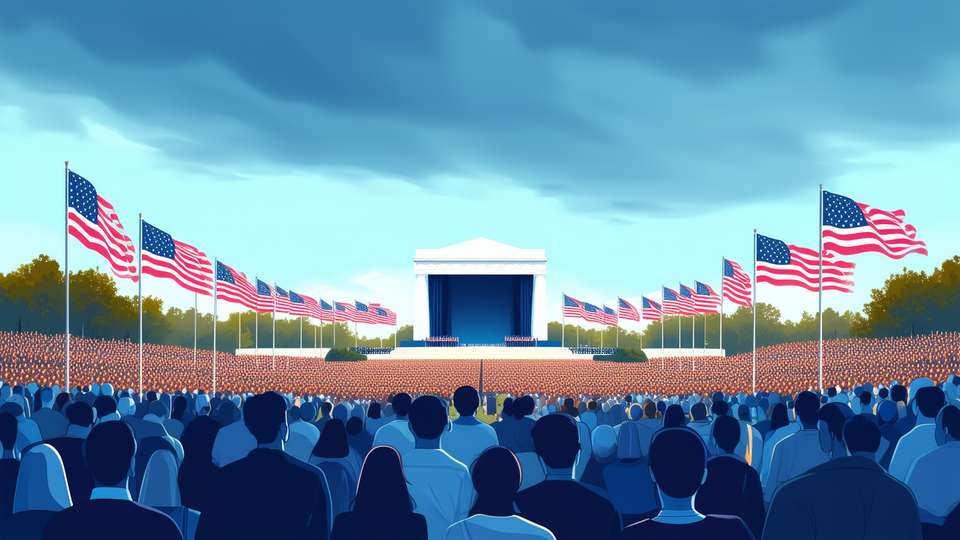
President Donald Trump’s July 4, 2026 “Salute to America 250” celebration on the National Mall turned into a rolling narrative of ever‑larger crowd estimates, each more ambitious than the last. In an initial statement after a severe weather warning forced officials to evacuate the Mall for over two hours, Trump cited an estimate of 375,000 people present before the evacuation. When the storm intensified, he later said the figure dropped to 150,000, describing the situation as “the craziest thing anyone’s ever seen.”
The following day, Trump’s social‑media post on Truth Social announced that the crowd had rebounded to 422,000 by 7:05 p.m., despite continued lightning and a cancelled event. He claimed to have personally overturned the cancellation decision and waited for attendees to “trickle back,” praising the Secret Service and law enforcement for swiftly re‑entering the arena.
Independent verification of any of these estimates remains absent. Newsweek reported a lack of credible sources confirming Trump’s figures, and other outlets emphasize that no independent aerial or on‑the‑ground counts have surfaced. Even if the reported 422,000 were accurate, the crowd would still be smaller than the roughly 500,000 spectators who gathered for the nation’s bicentennial parade in 1976, according to The New York Times.
The episode fits a broader pattern of inflated crowd claims associated with the former president. Following his 2017 inauguration, his press secretary described it as “the largest audience to ever see an inauguration,” a statement later contradicted by data showing lower attendance than past inaugurations, such as Barack Obama’s 2009 ceremony. More recently, aerial photographs from the Great American State Fair—a related event held on the Mall—displayed noticeable gaps in seating and spectators exiting mid‑address, prompting Trump to defend the event as “packed to the brim.”
Fact‑checkers have consistently highlighted this discrepancy between Trump’s assertions and observable evidence. Video footage and photographs from the July 4 event showed empty seats and a thin crowd during the speech, especially after the storm‑induced pause. Media outlets in Washington also noted that the “Salute to America” celebration was organized by Freedom 250, a public‑private partnership tied to the president’s broader “Great American State Fair” project, which has faced a series of setbacks, ranging from musical act cancellations to power outages.
Beyond the numbers, the episode underscores how political messaging can diverge sharply from on‑the‑ground realities. While Trump framed the event as a triumph over adversity – “no way we can be deterred” – the lack of independent data, combined with visual evidence of a sparse audience, suggests a narrative crafted more for political optics than factual reporting.
As the nation reflects on the symbolism of Independence Day, the episode serves as a reminder of the importance of transparent, verifiable data in public discourse. Accurate crowd estimates are not merely a matter of bragging rights; they help maintain trust between leaders and the public, especially during moments meant to celebrate the core democratic principle of a united citizenry.