Supreme Court Upholds Birthright Citizenship, Rejecting Trump’s Executive Order
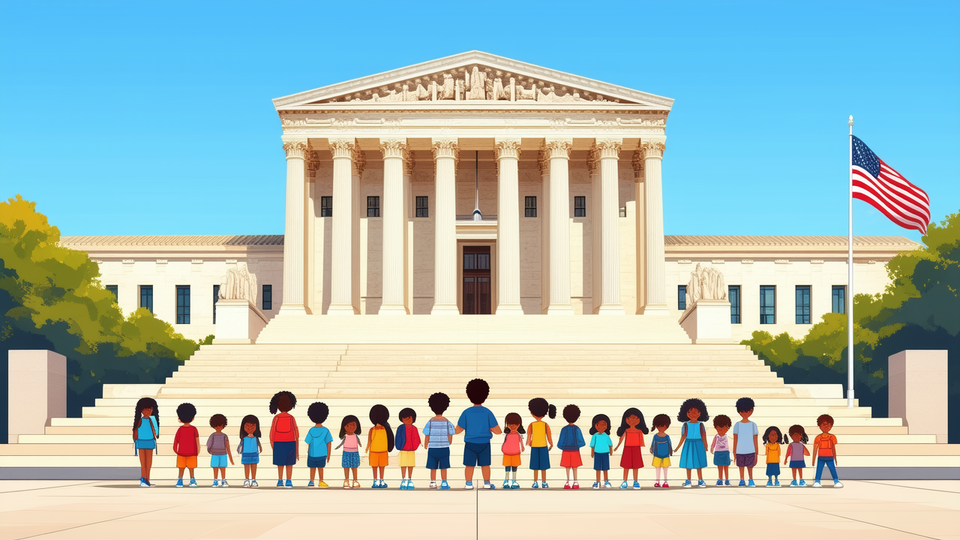
In a landmark ruling on Tuesday, the Supreme Court upheld the long‑standing principle that anyone born within the United States is automatically a citizen, regardless of the immigration status of a child’s parents. The Court rejected President Donald Trump’s executive order—issued on the first day of his second term—that aimed to limit birthright citizenship for children of undocumented or temporarily present foreigners. The decision, rendered on the final day of the Court’s term, was 6‑3 with Chief Justice John Roberts writing for the majority.
Roberts emphasized that the Fourteenth Amendment’s Citizenship Clause, ratified in 1868 after the Civil War, was intended to guarantee citizenship to all persons born or naturalized in the United States and subject to its jurisdiction. He traced the clause’s meaning back to its original purpose: to secure equal rights for formerly enslaved people and to extend citizenship to children of immigrants, as affirmed in United States v. Wong Kim Ark (1898). The majority held that the clause’s text does not differentiate between “domiciled” and “non‑domiciled” persons, and the limited historical exceptions—children of foreign diplomats and hostile occupying forces—do not apply to the vast majority of cases.
Justice Clarence Thomas, joined by Justices Samuel Alito and Neil Gorsuch, filed a dissent arguing that the Constitution’s original understanding of the clause was narrower, granting citizenship only to those whose parents were permanently domiciled in the United States. Thomas warned that the majority’s broad reading ignored the amendment’s historical context and opened the door to what he called an “abuse” of the democratic process.
The decision resolves a legal battle that began when Trump’s administration issued an executive order to revoke the automatic citizenship of children born to people in the country illegally or temporarily. The order was blocked by lower courts before ever taking effect, but the administration appealed directly to the Supreme Court after the Court’s earlier decision limiting its ability to issue nationwide injunctions.
“The Constitution’s guarantee of birthright citizenship is a fundamental promise that we, as a nation, must keep,” said ACLU attorney Cecillia Wang after the ruling. “A president cannot change the Constitution by executive fiat.”
Norman Wong, the great‑grandson of Wong Kim Ark, also praised the decision, noting that his ancestor’s case from 1898 continues to protect the rights of millions of Americans today. “My great‑grandfather never set out to become a symbol,” he said, “but his fight for citizenship endures.”
Republican leaders expressed disappointment, with Senator Eric Schmitt calling the ruling “dangerous” and suggesting a constitutional amendment as a remedy. President Trump, who has not publicly commented on the decision, had previously argued that the Fourteenth Amendment was originally intended only for former slaves and that it should be revised to reflect modern immigration concerns.
Legal scholars noted that the ruling reinforces the judiciary’s role in safeguarding constitutional rights against unilateral executive action. While the decision leaves the door open for Congress to alter the law—though any amendment would be a formidable undertaking—it firmly reestablishes the United States’ commitment to jus soli citizenship.
The ruling is expected to have immediate practical effects for families across the country, ensuring that children born on American soil retain their citizenship regardless of their parents’ status. It also signals to future administrations that attempts to change foundational constitutional protections through executive orders will face rigorous judicial scrutiny.
As the nation moves toward the 2026 elections, the Court’s decision will likely become a focal point in debates over immigration policy, federal authority, and the enduring legacy of the Fourteenth Amendment.