

Supreme Court Limits Federal Power to Disarm Marijuana Users
Background of the Case
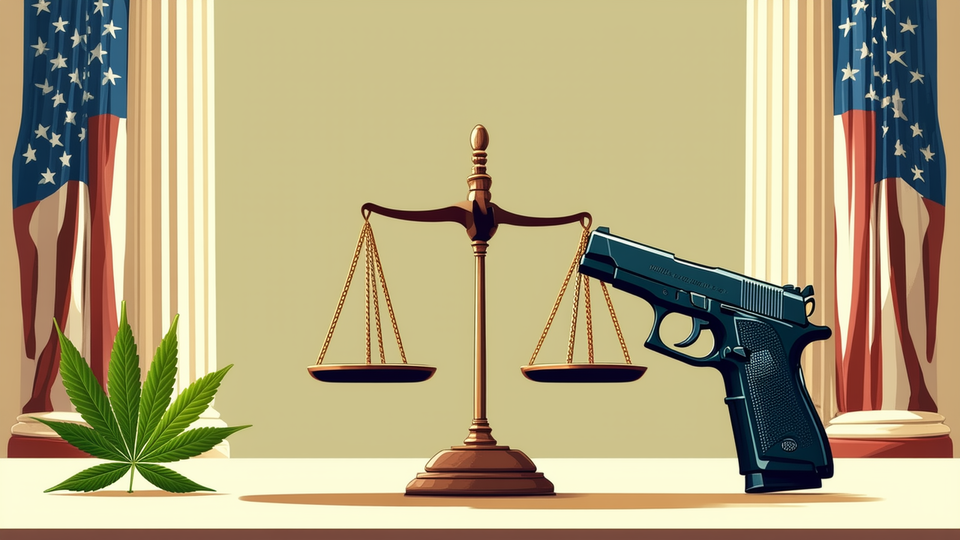
The federal government has long enforced a law from the 1960s that barred individuals who use controlled substances from legally possessing firearms. The case of Ali Danial Hemani, a dual U.S. and Pakistani citizen who was indicted after a search of his family home revealed a Glock pistol and a small amount of marijuana, put that law under the Supreme Court’s microscope. Hemani’s indictment alleged various drug‑related offenses, but the key question was whether merely using marijuana on a regular basis could automatically strip a person of the constitutional right to keep a gun.
The Supreme Court’s Decision
In a unanimous opinion written by Justice Neil Gorsuch, the Court rejected the government’s broad categorization of frequent marijuana users as categorically violent and dangerous. The justices emphasized that the government did not need to show any specific risk or dangerous conduct, and that such a sweeping assumption violated the Second Amendment. By narrowly interpreting the statute, the Court preserved the right to firearm ownership for those who use marijuana without a showing of actual threat or impairment.
Implications for Gun Rights and Drug Laws
The ruling sends a clear message that Congress cannot rely on blanket assumptions about drug users to justify disarming them. Nearly half of the United States has legalized small amounts of marijuana for recreational use, and many more states allow medical use. This decision respects the evolving legal landscape and protects the rights of millions who legally possess marijuana. However, the Court left open the possibility that future statutes could target individuals who are addicted, currently intoxicated, or have demonstrated dangerous behavior, indicating that the debate is not fully settled.
Future Legal Landscape
Legal scholars note that the decision avoids a broader ruling on whether it is constitutional to criminalize gun possession by drug addicts or people who are intoxicated at the moment of possession. The Court’s careful restraint suggests that future cases will need to present concrete evidence of danger, rather than relying on general drug‑use statistics. This approach reinforces the principle that analogical reasoning in constitutional law must connect closely to the historical tradition, preventing overly broad applications of old statutes to modern circumstances.
Conclusion
The Supreme Court’s narrowly tailored decision protects the fundamental right to bear arms while acknowledging that targeted restrictions may still be appropriate when specific threats are shown. By refusing to label all regular marijuana users as dangerous, the Court affirms a balanced view of public safety and individual liberties, setting a precedent for how drug‑related firearm restrictions will be evaluated in the years ahead.





