Russia’s Nationwide Fuel Crisis Escalates Amid Ukrainian Drone Attacks
Nationwide Fuel Crisis Unfolds
In early June 2026, Russia faced a sweeping gasoline shortage that touched almost all of its 83 regions. The crisis was triggered by an intensified campaign of Ukrainian drone attacks on key oil refineries, a strategy that disrupted the flow of fuel at a time when demand was already rising for the summer driving season.
Official statements from regional governors and mayors, corroborated by national media, confirmed that more than fifty regions were experiencing supply problems. Unofficial reports suggested that disruptions were present in nearly every jurisdiction. The most heavily affected areas, including Irkutsk and the Trans‑Baikal region in Siberia, declared a “state of heightened alert,” just one tier below a full state of emergency.
Analysts estimate that Russian gasoline production is currently running about twenty percent below the level required to meet domestic consumption. Refinery runs, which measure how much crude oil is processed, have fallen to multi‑year lows. The combination of sustained drone strikes and ongoing repair work from previous campaigns has strained the industry’s capacity to rebound quickly.
President Vladimir Putin addressed the nation, acknowledging “certain shortages” but downplaying their severity. He also emphasized the urgent need to accelerate the production of air‑defence systems, highlighting Russia’s growing vulnerability to further strikes. In response, the government has pursued a series of emergency measures: shortening planned maintenance at refineries, exploring a ban on diesel exports, and increasing gasoline imports, including shipments from India to fill the gap.
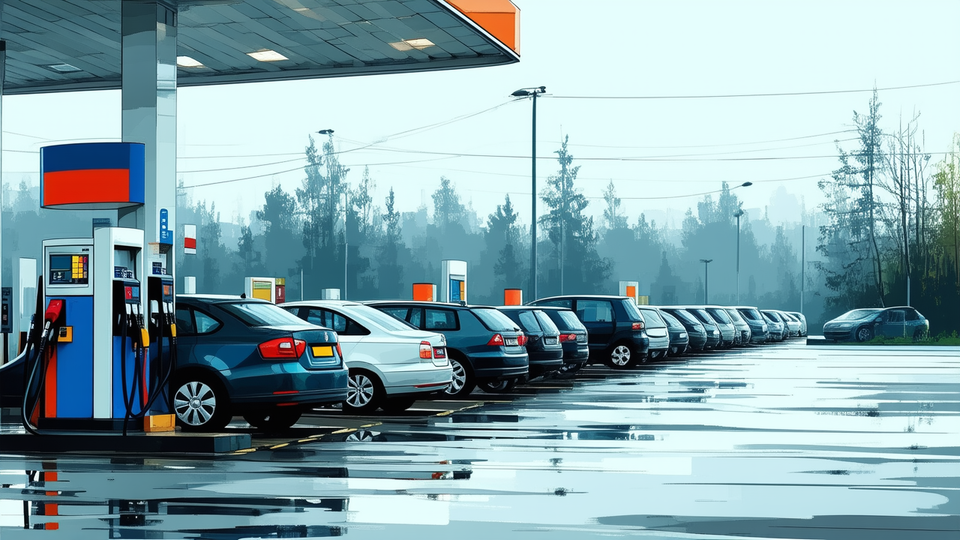
Local authorities and fuel station operators have adopted a patchwork of rationing policies. In many cities, drivers face long queues that can stretch for hours, with some reports of waits up to eighteen hours. Restrictions on large fuel canisters aim to curb hoarding, while police have cracked down on black‑market sales, resulting in fines and arrests for individuals attempting to resell fuel at inflated prices.
The social impact has been palpable. Videos circulating on social media show heated confrontations at pumps, with drivers disputing their place in line. In Moscow, drivers describe traveling across the city for days in search of fuel, only to be turned away or told that each station decides its own distribution rules. Public officials warn that the shortages risk sparking broader uncertainty and could deepen inflationary pressure as fuel prices climb.
Economically, the crisis adds strain to an already fragile Russian budget. Higher fuel prices feed into broader price pressures, prompting the central bank to raise interest rates only modestly despite rising inflation. The shortage also hampers industrial output and threatens the logistics that sustain daily commerce across the nation.
Looking ahead, the persistence of Ukrainian drone attacks remains the key variable. If the assault intensity continues, Russia may be forced to accept lower‑quality gasoline or further restrict fuel allocations, both of which could exacerbate public dissatisfaction. Conversely, a successful repair effort and increased imports might stabilize supplies before the high‑demand season peaks.
In the meantime, the everyday Russian faces the reality of rationed fuel, longer travel times and an uneasy outlook on energy security. The crisis underscores how modern conflict can ripple through civilian life, testing both governmental resilience and the patience of a population accustomed to reliable mobility.