

Rome’s 80th‑Anniversary Vespa Rally Lights Up the Eternal City
Rome Celebrates 80 Years of the Iconic Vespa
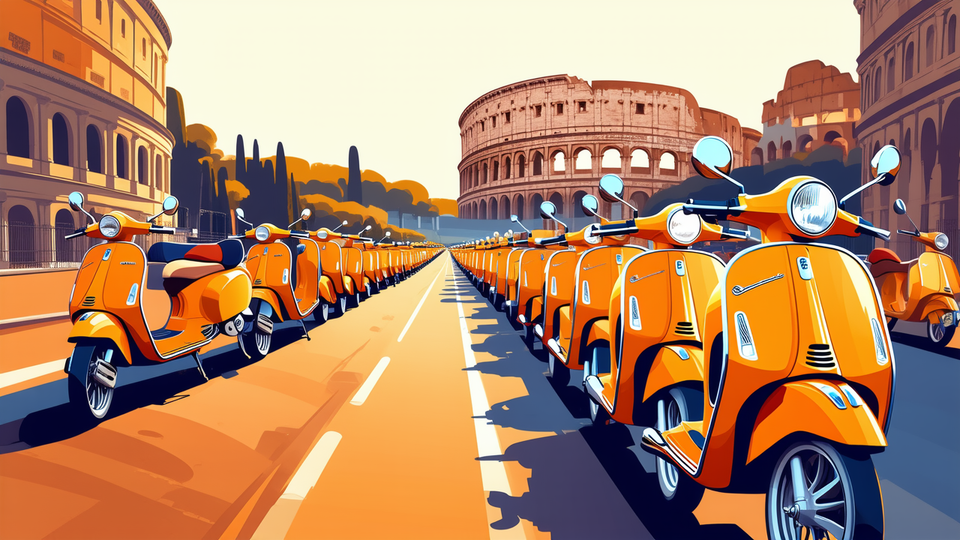
On Saturday, June 27, 2026, the streets of Rome turned into a sea of bright orange and classic steel as more than 10,000 Vespa scooters wound their way past the Colosseum, the Roman Forum and countless cobblestone lanes. The gathering, officially called “Vespa Roma 2026 – 80 Years of an Icon,” marked the eighth decade of the beloved two‑wheeled vehicle that first rolled off the Piaggio factory in 1946.
The celebration was organized by Piaggio and local enthusiast clubs, who transformed the historic Foro Italico and the Stadio dei Marmi into a “Vespa Village.” The venue hosted exhibitions of rare vintage models, races, parades and a marketplace of Vespa‑branded merchandise. Thousands of riders arrived from Europe, the United Kingdom, the United States, Australia, the Philippines and other continents, each eager to honor a scooter that has become a symbol of post‑war recovery, stylish mobility and urban freedom.
Vespa’s story began in the aftermath of World II when Piaggio, an aircraft manufacturer whose Pontedera plant had been destroyed, turned to lightweight, affordable transportation. The scooter’s design—featuring a flat‑floor chassis that allowed riders to keep their feet planted and a sleek, wasp‑like silhouette—quickly captured the imagination of a generation seeking practicality and style. Its cinema debut in 1953’s “Roman Holiday” with Gregory Peck and Audrey Hepburn cemented the Vespa’s place in popular culture, a legacy that continued in films such as “The Talented Mr. Ripley” and the animated “Luca.”
Today, the Vespa remains a cultural export. Piaggio reports sales of about 20 million scooters worldwide since 1946, with a presence in more than 110 countries. In the United States, the Vespa enjoys a loyal following in states such as Florida and California, though it remains a niche market compared to larger motorcycles. The 80th‑anniversary ride showcased not only nostalgia but also the scooter’s ongoing relevance: its compact size reduces traffic congestion, its efficient engine lowers emissions, and its modest cost makes personal mobility accessible to a broad spectrum of riders.
Participants highlighted the emotional connection to the Vespa. “The shape, the elegance—this very charming attitude of Vespa is much more of a lady than a man,” said Piaggio executive vice‑president Davide Zanolini. Riders exchanged stickers, swapped stories of cross‑country journeys, and even displayed family heirlooms such as a Vespa‑logo tattoo and a Westie terrier named “Westie” wearing a tiny helmet. A limited‑edition 80‑year helmet, emblazoned with “80 Years of an Icon,” became a prized souvenir.
The event also underscored the role of community in preserving heritage. Local businesses set up booths, vendors sold Vespa‑themed apparel, and crowds sang, cheered and took photographs against the backdrop of ancient ruins. For many, the day offered a reminder that mobility can be both functional and joyful, linking modern environmental awareness with a timeless design that has survived war, cultural shifts and changing urban landscapes.
As the sun set behind the Colosseum, the roar of Vespas echoed through the city, a lively reminder that the spirit of post‑war ingenuity continues to ride forward. The 80‑year milestone not only celebrates a product but also the shared experiences of countless riders who view the Vespa as a conduit for freedom, community and sustainable travel.





