

NATO Secretary General Rutte Vows Tough but Discreet Enforcement of Defence Spending Goals
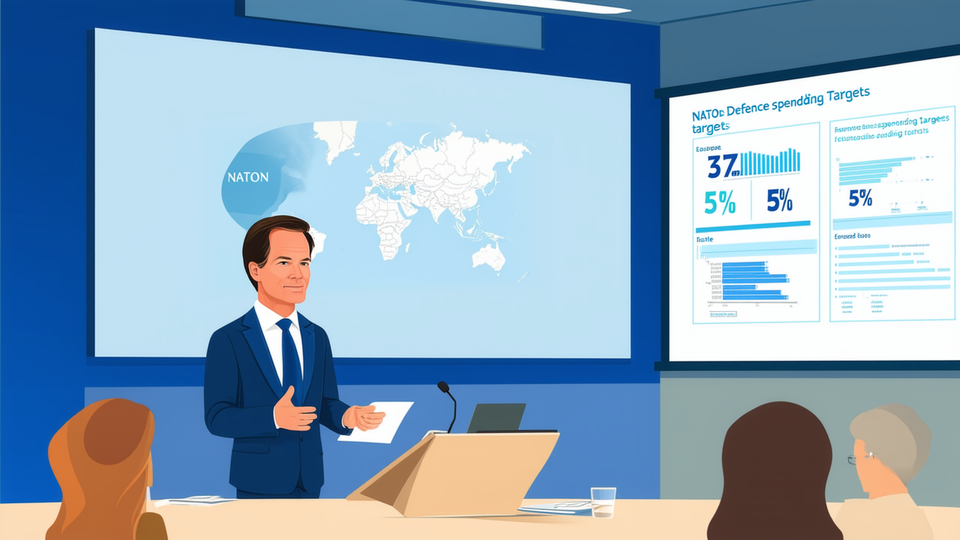
NATO’s Push for Stronger Defence Spending
On 25 June 2026 NATO Secretary General Mark Rutte said he would be “tough but discreet” in making sure every alliance member meets the agreed defence spending targets. He linked this promise to the ongoing debate in the United Kingdom over its future military funding, noting that when countries have to “really step up” there will inevitably be “discussions.”
Rutte explained that the alliance’s ambition is for all members to reach a combined 5 % of gross domestic product (GDP) on defence and resilience by 2035. This figure is split into a 3.5 % core defence spending core and a 1.5 % contribution to broader resilience. He said the goal will be a key agenda item at the NATO summit in Ankara, Turkey, early next month.
The United Kingdom currently faces a shortfall. Outgoing Prime Minister Keir Starmer’s government plans to publish a defence investment plan before the summit, but the plan is expected to raise British spending to only about 2.68 % of GDP by 2030. That leaves the UK well below the 3.5 % core target for 2035. The former defence secretary, John Healey, recently resigned, citing the delayed plan and the gap between the promised £28 billion and the £13.5 billion that seemed realistic.
Across the alliance, other members are also under pressure. Rutte mentioned that Europe and Canada are generally on a solid path, but “a few” may need encouragement. He pointed to Italy, the Netherlands, and other European states that are working to balance budgets while still increasing defence allocations. The United States, meanwhile, has urged allies to fill any gaps left by the planned reduction of American forces in Europe, emphasizing that the burden‑sharing principle must be upheld.
Beyond the numbers, Rutte framed the spending targets as a matter of collective security. He warned that the Russian leader, Vladimir Putin, is not afraid of commitments on paper; he is afraid of their implementation. By reinforcing defence budgets, NATO members send a clear signal of resolve to deter aggression and protect the alliance’s shared values.
The upcoming summit will test the alliance’s unity. NATO’s deputy chief, Air Chief Marshal Sir John Stringer, has already called for a “highly political” summit that demonstrates cohesion. Observers note that the summit will also address the need for more ammunition production, particularly 155 mm artillery shells, and will discuss how to sustain a credible force without relying solely on U.S. capabilities.
In summary, Rutte’s approach combines a firm stance on meeting the 3.5 % and 5 % targets with a diplomatic willingness to handle sensitive discussions privately. The outcome of the Ankara summit will reveal whether the alliance can translate its political commitments into tangible budgetary actions, thereby strengthening its deterrence posture against Russia and preserving the credibility of the NATO partnership.





