May 29,2026 – Emerging Iran Deal Risks Shattering Netanyahu Legacy
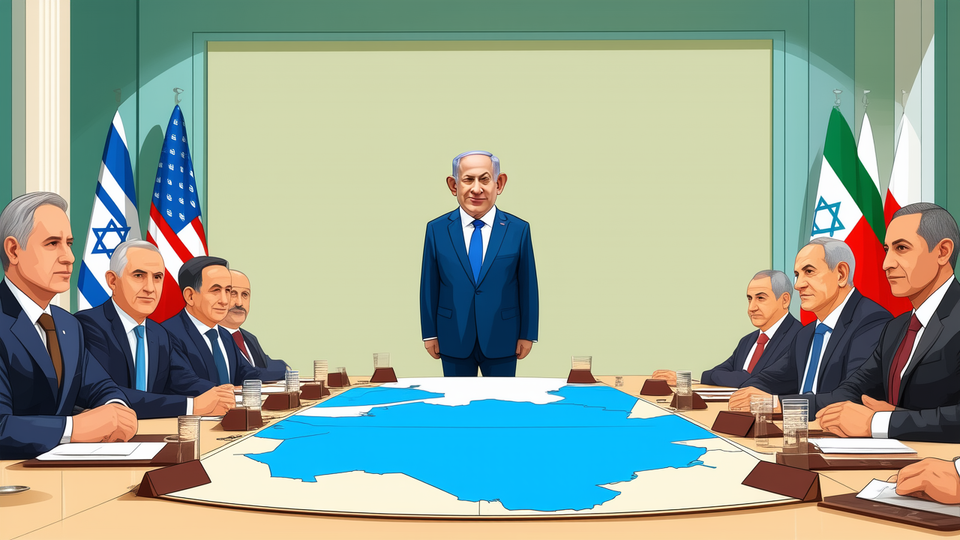
The Shifting Alliance: Netanyahu’s Marginalization in the Middle East
The joint strike against Iran in February 2026 marked a peak in U.S.-Israel cooperation, a moment many had seen as the culmination of a decades‑old partnership. Yet, within months, the conflict has moved from a shared military campaign to an American‑led diplomatic effort that has left Israeli Prime Minister Benjamin Netanyahu increasingly sidelined.
Israeli officials now admit that Washington’s strategy to resolve hostilities places limited influence from Jerusalem. Although Netanyahu has urged Trump for renewed air strikes that could crush the Iraqi‑aligned regime, the White House has opted for a more traditional diplomatic approach, raising concerns that core Israeli security objectives—such as removing Iranian enriched uranium and curbing Hezbollah’s operational reach—might be compromised for the sake of strategic appeasement.
Netanyahu’s discomfort is evident. Behind closed doors he has acknowledged that Israel has little say over the outcome of U.S. negotiations. Sources describe him as worried that an “interim deal” could leave Israel vulnerable, loosening the blockade on Iranian ports and strengthening Tehran’s economic capacity, while the U.S. could be forced to accept compromises that do not address Israel’s nuclear weapons concerns.
At the same time, the Israeli army has escalated operations in Lebanon, insisting that its freedom of operations remains untouched. This has added pressure from Netanyahu’s own coalition, where hard‑right ministers call for a more aggressive posture. The internal political balance in Israel, now favoring a tougher stance, clashes with Washington’s cautious diplomacy, creating a double bind for the prime minister.
In addition to military strategy, the U.S. faces growing public skepticism. Pew and Gallup polls record a sharp decline in favorable views of Israel, especially among younger voters and Democrats. Political polarization in America threatens the bipartisan foundation that once supported Israel’s strategic importance to the U.S. Washington must now negotiate Israel’s interests while preserving domestic support for its global alignments.
The implications of this diplomatic shift are twofold. First, Netanyahu’s legacy—built on resisting Iranian influence through relentless pressure—now appears fragile as the U.S. refrains from substantial force. Second, Israel’s strategic calculus is forced to deal with uncertain outcomes: a possible reduction of U.S. aid and a more complicated relationship with Russia‑backed powers that support Iran.
While some Israeli officials argue that tighter defense integration could compensate for reduced U.S. support, the reality is that Israeli military hardware remains largely U.S.‑derived. A 2026 move toward greater independence will require unprecedented domestic investment and a reassessment of Israel’s reliance on American political stability.
For the U.S., the tension between national security and political positioning is stark. A partnership like the one forged in 2023 may weaken once signatories reevaluate their commitments, especially if the next U.S. administration prioritizes other priorities over an extended engagement in the Middle East. Netanyahu’s position, coupled with internal pressures, cages him between the demands of a fragmented coalition and a diplomatic direction that may no longer reflect Israel’s military realities.
Ultimately, the emerging Iran deal testifies that the Israeli-Palestinian context, long an anchor for strategic baselines, now risks redefining the U.S.-Israel relationship in a rapidly changing geopolitical landscape, potentially scraping away the legacy Netanyahu sought to cement for a post‑Iran era of reinforced sovereignty and security.