Louisiana Redistricting Plan Aims to Gain GOP Seat Amid Supreme Court Ruling - May 29, 2026
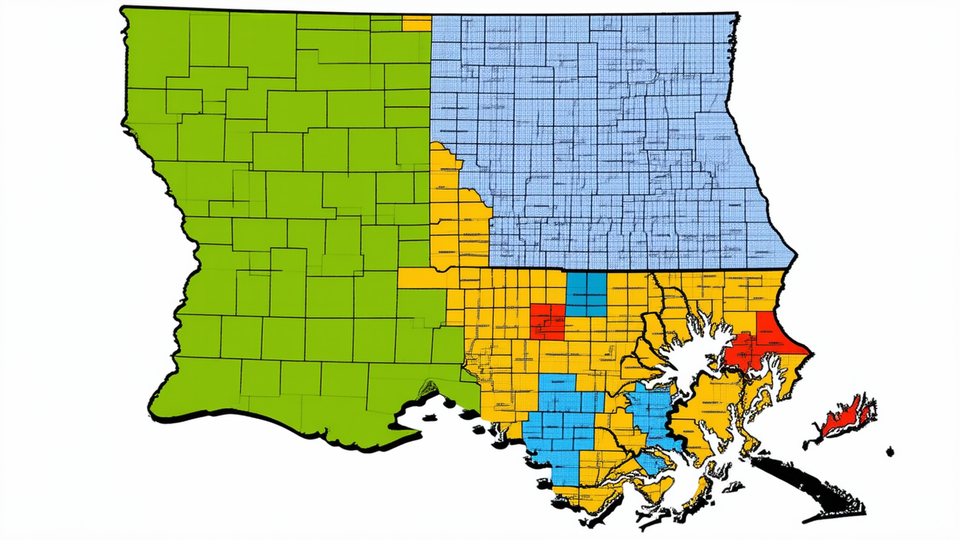
Louisiana’s Redistricting Saga Continues
On May 29, Louisiana lawmakers approved a new congressional map that reduces the number of majority‑Black districts from two to one. The change is slated to give the Republican Party an additional seat in the U.S. House and shield prominent GOP incumbents such as House Speaker Mike Johnson from dangerous primary challenges.
The decision follows a late‑April Supreme Court ruling that the state’s 2024 map was an illegal racial gerrymander, violating the 1965 Voting Rights Act. In response, legislators have moved quickly, citing the need to comply with the courts while preserving Republican advantage.
The new map eliminates the 6th Congressional District, which stretched from the Baton Rouge area north toward Shreveport and had been represented by Democrat Cleo Fields. The plan repackages that area around predominantly white communities in the Baton Rouge region and southern Louisiana, while adding parts of Baton Rouge to a heavily Democratic, majority‑Black district in New Orleans represented by Rep. Troy Carter.
Republican Rep. Beau Beaullieu, chair of the house redistricting committee, said, “We drew this map to improve Republican strength.” He explained that a more aggressive plan—one that would give Republicans a shot at winning all six seats—would have required adding more Democratic voters to Republican‑held districts, potentially weakening the re‑election prospects of key GOP leaders.
Democratic leaders have criticized the map as a continuation of racial gerrymandering. Rep. Edmond Jordan, chair of the Louisiana Legislative Black Caucus, warned that “drawing a map around partisanship would produce exactly the racial results that the Constitution forbids.” Representative Clay Higgins also denounced the plan as a “Frankenstein looking thing” and an “insanely bad map.”
Legal experts foresee further litigation. Plaintiffs who challenged the Supreme Court’s decision have suggested the new lines still pack Black voters into a single district, potentially violating the Voting Rights Act. The state is likely to face court battles before the mid‑term election campaign begins.
Ultimately, the redistricting effort reflects the broader national trend in which Republican‑controlled southern states have seized weakened federal oversight to reshape congressional maps ahead of the 2026 mid‑terms. Louisiana’s move could tilt the balance of power in the U.S. House by turning a 4‑2 GOP advantage into a 5‑1 split, but the map’s legality remains contested.