

Gulf Nations Question U.S. Security Guarantees After Iran’s June 2026 Drone Strikes
Introduction
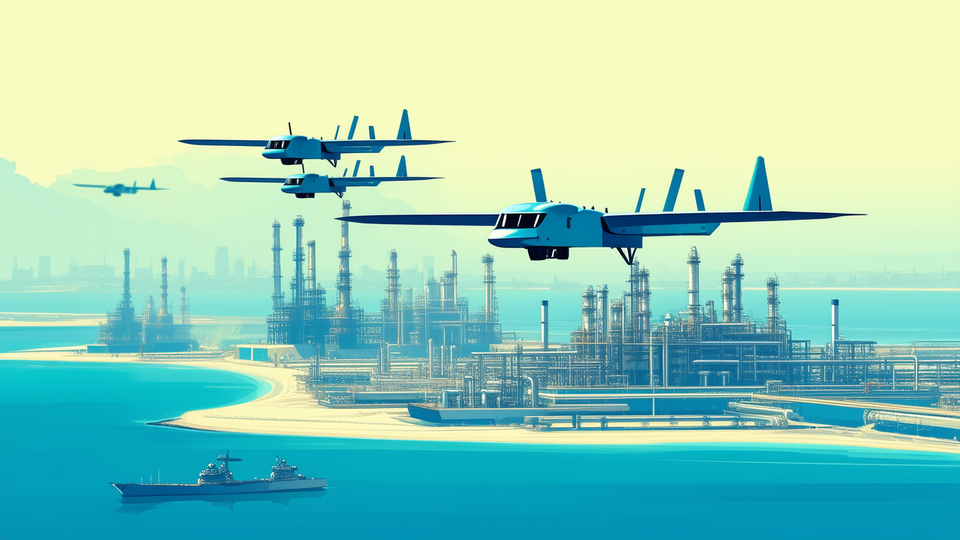
In mid‑June 2026 Iran escalated its campaign against several U.S. allies in the Gulf, deploying drones that struck Bahrain, Qatar and the United Arab Emirates. The attacks targeted critical infrastructure, naval assets and commercial facilities, creating immediate economic disruption and raising alarms about regional stability.
Developments on the Ground
Iran’s drone strikes on Bahrain were described by the Bahraini Foreign Ministry as a “flagrant threat to the security of citizens and residents.” The kingdom, home to the U.S. Navy’s 5th Fleet, reported that multiple drones entered its airspace, although specific damage details were not disclosed. Similar offensive actions were reported against Qatar and the UAE, where Iranian drones aimed at oil facilities and military sites caused temporary shutdowns and heightened tension.
In response, the United States launched retaliatory airstrikes aimed at Iranian missile and drone launch sites, as well as coastal radar installations. The U.S. Central Command confirmed that its forces struck these targets to diminish Iran’s capability to continue attacks. Simultaneously, high‑level diplomatic talks continued, with both nations working toward a final agreement under an interim framework that addresses maritime security and Iran’s stockpile of highly enriched uranium.
Debate Over U.S. Protection
Following the attacks, Gulf leaders convened to reassess the reliability of American security guarantees. Bahrain’s foreign minister emphasized the need for a “clear and open Strait of Hormuz,” urging the United States to reaffirm its commitment. Qatar and the UAE expressed similar concerns, questioning whether U.S. policy could reliably deter future Iranian aggression.
U.S. Secretary of State Marco Rubio publicly stated that the United States “will not do anything that would undermine the security of our Gulf allies,” reaffirming the diplomatic stance of unwavering support. Vice President JD Vance also warned Iran to engage in dialogue, saying the nation must “pick up the phone” to resolve disagreements, while emphasizing that any further violence would be met with decisive action.
The dialogue underscores a broader strategic dilemma: while the United States seeks to maintain influence and stability in the Persian Gulf, the recent Iranian aggression exposes the limits of deterrence and the importance of multilateral cooperation among Gulf states.
Conclusion
Iran’s June 2026 drone campaign has intensified scrutiny of the U.S. security umbrella protecting Gulf nations. While American officials continue to promise steadfast support, the attacks have prompted Bahrain, Qatar and the UAE to vocalize doubts and call for stronger, more transparent assurances. The outcome of ongoing negotiations and the ability of the United States to convincingly uphold its commitments will shape the future of regional security and the political calculus of both Gulf allies and their adversaries.





