

Gavin Newsom Calls for a Federal Billionaire Tax to Tackle Wealth Inequality
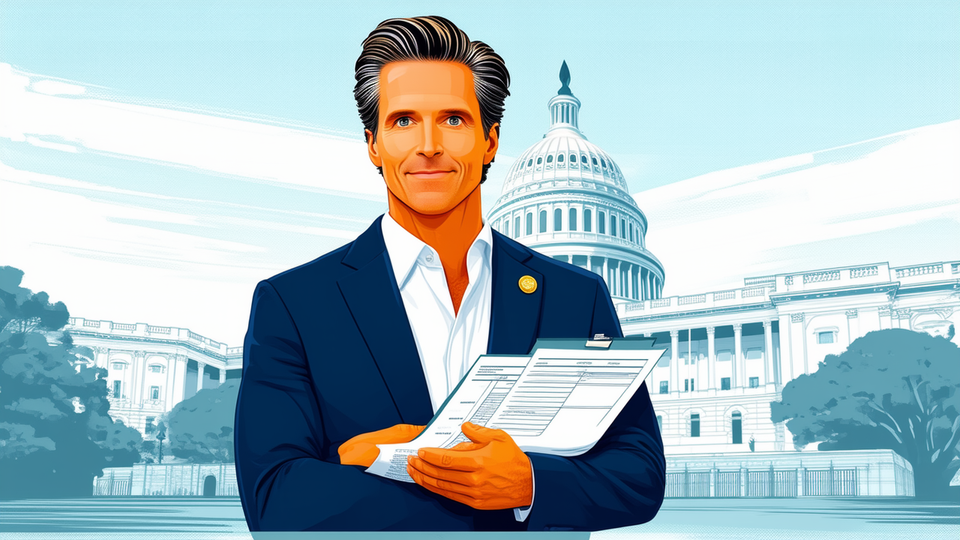
Federal Billionaire Tax Proposal
California Governor Gavin Newsom announced a bold federal wealth‑tax plan on June 26, 2026, positioning it as a national solution to the growing gap between the richest Americans and the median household. While a state‑level “Billionaire Tax” measure is set to appear on the California ballot, Newsom argues that a fragmented state approach would be easily circumvented by mobile billionaires. He proposes a minimum tax on anyone with a net worth above $100 million, closing loopholes that allow the ultra‑wealthy to shelter income.
The proposal would replace the one‑time 5 percent levy targeted at California residents with over $1 billion in assets. Instead of earmarking most of the revenue for health care, as the state measure does, the federal plan calls for a broader distribution of funds: universal child‑care, tuition‑free higher education, expanded health‑care access, and a national public equity fund that would give every American a stake in the rapidly expanding artificial‑intelligence sector. By asking the federal government to own a share of AI companies, the plan seeks to ensure that the economic gains of automation benefit the whole country, not just a privileged few.
Newsom also targets corporate tax policies, urging a return to the pre‑2017 corporate tax rate and demanding tighter rules on inheritance. He warns that without action, the projected $124 trillion inter‑generational wealth transfer could cement an entrenched American aristocracy. The governor’s strategy emphasizes that wealth inequality is not merely an economic issue but a threat to democratic institutions, echoing long‑standing calls for progressive tax reform.
Political reactions have been sharply divided. Major philanthropists and tech founders such as Larry Page and Sergey Brin have signaled intent to relocate, while labor unions that originally championed the state initiative express concern that the national plan may dilute their influence. Nevertheless, the proposal aligns with a broader Democratic push for a “modern Buffett Rule” and mirrors efforts by Senators Bernie Sanders and others to impose a 5 percent annual tax on the nation’s wealthiest families.
Critics argue that a national tax could be difficult to enforce and may spur capital flight. Newsom counters that state‑level measures are already proving vulnerable to migration, and that a uniform federal policy would close loopholes that some states exploit. He frames the tax as a moral imperative: a society that allows extreme concentration of wealth undermines social cohesion and hampers collective progress.
As the 2028 presidential cycle looms, the proposal serves both policy and political purposes. By championing a wealth tax, Newsom distinguishes himself from other contenders and signals a commitment to economic justice. The debate now centers on whether the federal government can muster the political will to enact such a sweeping reform and how it will reshape the nation’s fiscal landscape.





