China’s Patrols Around Scarborough Shoal Raise Regional Tensions
Scarborough Shoal Patrols Heighten Tensions
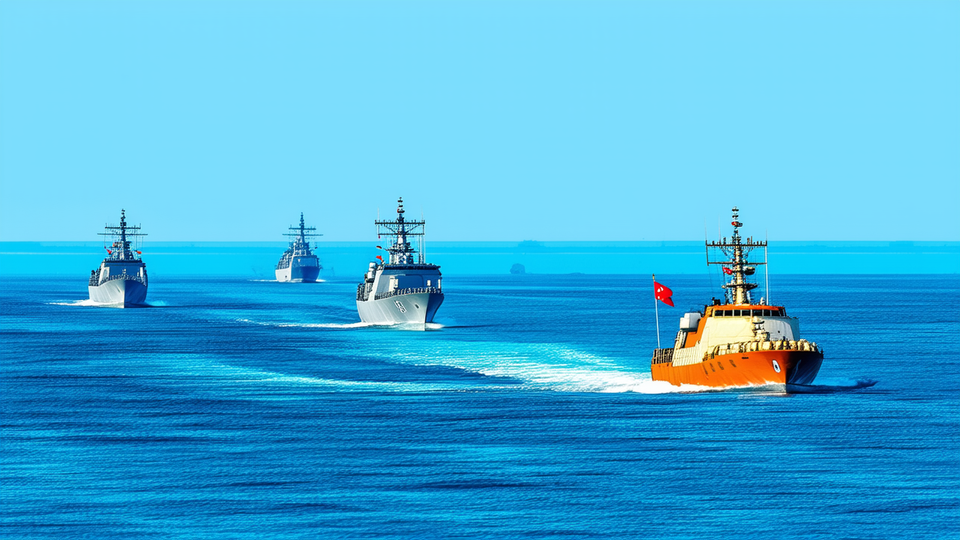
On June 30, 2026, Chinese military and coast guard vessels carried out patrols in the waters surrounding Scarborough Shoal, a feature claimed by both China and the Philippines in the South China Sea. The Chinese authorities described the operation as a routine measure to safeguard what they assert are legitimate territorial rights. The patrols took place less than 60 miles from a series of joint exercises conducted by the United States and the Philippines, known as maritime cooperative activities, which are part of the U.S. effort to support its allies in the region.
Just a day earlier, a Chinese People’s Liberation Army (PLA) warship, identified as a Jiangkai‑class guided‑missile frigate, was observed shadowing a mixed fleet of U.S. Coast Guard cutters and Philippine naval and coast guard ships. The U.S. Seventh Fleet highlighted the drills as a demonstration of a “free and open Indo‑Pacific,” emphasizing collective security and the rule‑based international order. Chinese officials, however, framed the presence of their vessels as a response to “collusion” between the Philippines and external powers, alleging that the Philippine government was undermining regional peace and stability.
Chinese spokesperson Zhai Shichen reiterated that the June 30 patrols were “routine.” He emphasized that the Chinese government would “resolutely defend” its sovereignty and maritime rights, echoing longstanding statements from the PLA Southern Command. The messaging seeks to legitimize Beijing’s activities despite multiple incidents in recent years, including a 2025 collision, the declaration of a marine nature reserve over much of the shoal, and the temporary placement of a floating platform and other objects that the Philippines described as violations of its sovereignty.
From the Philippine perspective, the presence of Chinese vessels near the shoal is perceived as an encroachment on its exclusive economic zone. The Philippine military and the Department of Foreign Affairs have stressed the importance of upholding international law, particularly the United Nations Convention on the Law of the Sea (UNCLOS), which provides guidance on maritime entitlements. The joint U.S.–Philippine exercises, which included search‑and‑rescue drills and information‑sharing activities, were intended to reinforce the Philippines’ capacity to monitor its waters and to signal allied support.
The clash of narratives reflects a broader strategic competition in the South China Sea, where China’s expansive nine‑dash line claims overlap with the Exclusive Economic Zones of several Southeast Asian nations. While China frames its patrols as lawful enforcement of its historic rights, critics argue that such actions undermine regional stability and contravene established maritime norms. The United States continues to conduct freedom‑of‑navigation operations and joint drills to affirm its commitment to a rules‑based order, while also urging diplomatic dialogue to de‑escalate tensions.
In the short term, the patrols and the shadowing incident are likely to increase diplomatic friction between Beijing, Manila, and Washington. Both the United States and the Philippines have reaffirmed their resolve to protect shared interests in the maritime domain, and China has signaled that it will persist in safeguarding what it calls its sovereign interests. The situation underscores the delicate balance between national security objectives and the need for cooperative mechanisms to manage disputes peacefully.
Looking ahead, continued vigilance and diplomatic engagement will be essential to prevent further escalation. A sustained emphasis on international law, transparent communication, and confidence‑building measures may help to reduce the risk of inadvertent conflict and preserve the stability of one of the world’s most vital sea lanes.