China conducts rare long-range submarine missile test in the Pacific
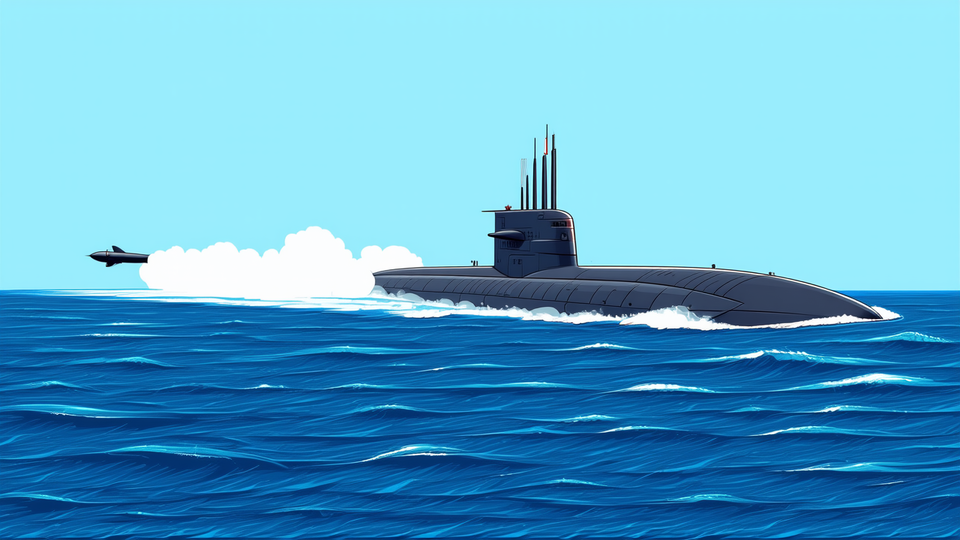
At noon on Monday, June 7, 2026, a Chinese nuclear‑powered submarine fired a long‑range ballistic missile from the South Pacific. The projectile carried a non‑explosive, dummy warhead and travelled more than 4,000 miles before splashing down within the boundaries of the Pacific Nuclear‑Free Zone, a region established by the 1986 Treaty of Rarotonga to prohibit nuclear weapons testing.
China’s state news agency Xinhua described the launch as a “routine arrangement” of the People’s Liberation Army Navy’s annual training schedule. The ministry added that the missile was not aimed at any country or specific target and that the operation complied with international law and practice. Senior Capt. Wang Xuemeng, a spokesperson for the PLA Navy, said the test was part of standard training and that relevant nations had been informed in advance.
The timing of the test amplified regional anxieties. Earlier that day, Australian Foreign Minister Penny Wong and Fijian leaders signed a landmark defence treaty, pledging mutual defence obligations in the face of an increasingly assertive Chinese military posture. Australia’s foreign ministry swiftly labeled the missile test “destabilising” and urged China to provide greater transparency. New Zealand’s Foreign Minister Winston Peters, who had been notified just hours before the launch, called the action “unwelcome and concerning,” emphasizing that New Zealand has no interest in seeing the Pacific turned into a testing ground for strategic weapons.
Japan also voiced strong criticism. The Japanese government said it had been notified of the launch and urged China to reconsider the test, warning that falling debris could threaten Japan’s exclusive economic zone. Officials highlighted that the missile’s trajectory passed close to Japanese airspace, heightening fears of accidental incursions.
The test marks China’s first submarine‑launched long‑range missile trial since a similar exercise in 2024, when an intercontinental ballistic missile was launched from Hainan Island into the Pacific. Analysts note that the latest launch showcases China’s expanding JL‑2 and JL‑3 submarine‑launched ballistic missile capabilities, which can reach the continental United States from waters off China’s coast. The People’s Liberation Army Navy now operates six Jin‑class (Type 094) ballistic‑missile submarines, each capable of deploying these weapons.
Regional security experts warn that such tests, while framed as routine, have strategic implications. The United States and its allies view the Pacific as a critical arena for power projection, and any perceived escalation could provoke counter‑measures. The United States has historically conducted its own submarine‑launched missile tests, but typically provides weeks of notice and avoids operating within the nuclear‑free zone.
China’s defense ministry responded to criticism by urging neighboring countries not to over‑interpret the launch. The ministry reiterated that the test was not intended as a threat, but observers argue that the lack of transparency deepens mistrust. The incident underscores the growing complexity of maritime security in the Indo‑Pacific, where overlapping claims, treaty obligations, and advanced weapon systems intersect.
As nations reassess their defence postures, the test may accelerate diplomatic and military initiatives aimed at bolstering regional stability. Australia, New Zealand, Japan, and the United States are likely to increase joint patrols and information‑sharing, while China may seek to justify its actions through additional diplomatic outreach. The episode serves as a reminder that even routine training exercises can have far‑reaching geopolitical consequences in a region already fraught with tension.