

Caracas’s Infrastructure Crumbles: Why the Capital Is So Vulnerable to Earthquakes
Introduction
In late June 2026, two powerful tremors struck near Caracas, the Venezuelan capital, causing massive loss of life and widespread damage. More than 235 people were confirmed dead and over 4,300 injured. The catastrophe sparked global attention, but the deeper story lies in why the city was so ill‑prepared for such events.
Geological Amplifiers
Caracas sits atop a deep sedimentary basin that magnifies seismic waves. Scientists explain that these soft sediments act like a giant “pancake” underfoot, increasing the intensity of shaking compared to surrounding rock. The earthquakes were also unusually shallow, only about 7.8 km deep, which means the energy was released very close to the surface, further intensifying the impact on the city’s structures.
Historical Vulnerability
Venezuela has endured major quakes before. In 1812 a massive shock flattened colonial buildings, killing roughly 30,000 people. A 1967 earthquake later collapsed several high‑rise towers, claiming 240 lives. These past events illustrate a long‑standing exposure to seismic danger, yet sufficient mitigation never followed.
Under‑funded Infrastructure and Building Practices
Decades of economic sanctions and limited public investment have left Caracas’s infrastructure chronically under‑funded. Buildings often lack proper design for seismic forces, and many stand on insecure ground. Informal housing, which may house up to half of the city’s five‑million residents, is typically constructed with unreinforced cinderblocks and little or no reinforcement, making them exceptionally vulnerable.
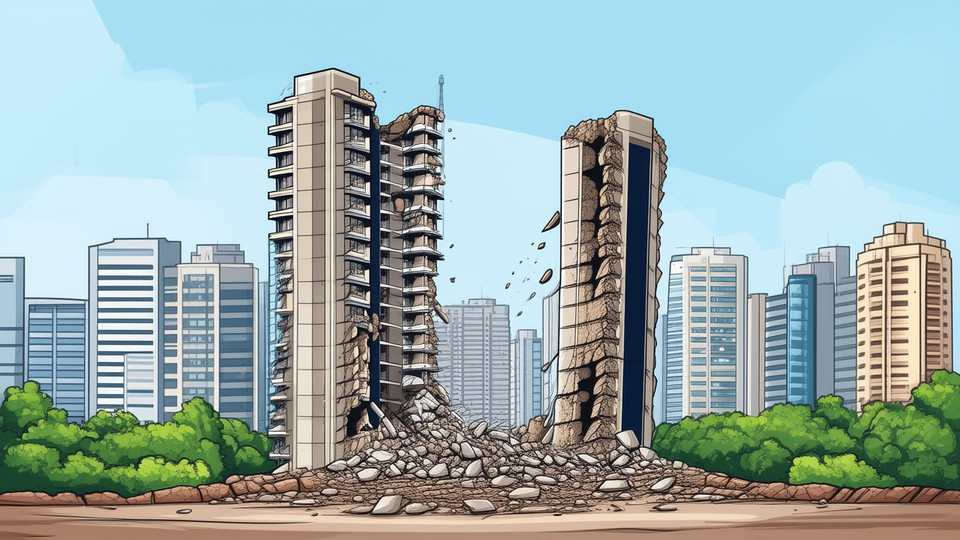
Even where formal construction occurs, building codes are weakly enforced. The Altamira district, for example, saw a 22‑story tower collapse in a “pancake” fashion, highlighting how poor design and inadequate foundation work can lead to catastrophic failure when the ground shakes.
Economic Constraints and Governance
Venezuela’s Gross Domestic Product, roughly $111 billion, faces an estimated economic damage of 1–7 percent from the June earthquakes. Long‑standing under‑investment, aggravated by international sanctions, has made large‑scale retrofitting and modern code implementation financially impossible. Without these upgrades, even newer structures remain at risk.
Conclusion
The June 2026 disaster demonstrates that Caracas’s vulnerability is not a matter of chance but a convergence of geological reality, historical neglect, and economic hardship. Strengthening building codes, investing in seismic retrofits, and addressing informal housing are essential steps if the city hopes to withstand future tremors. Until then, the risk of another devastating collapse will loom over the capital.





