

Americans Favor Religious Diversity Over a Primarily Christian Nation, New Poll Shows
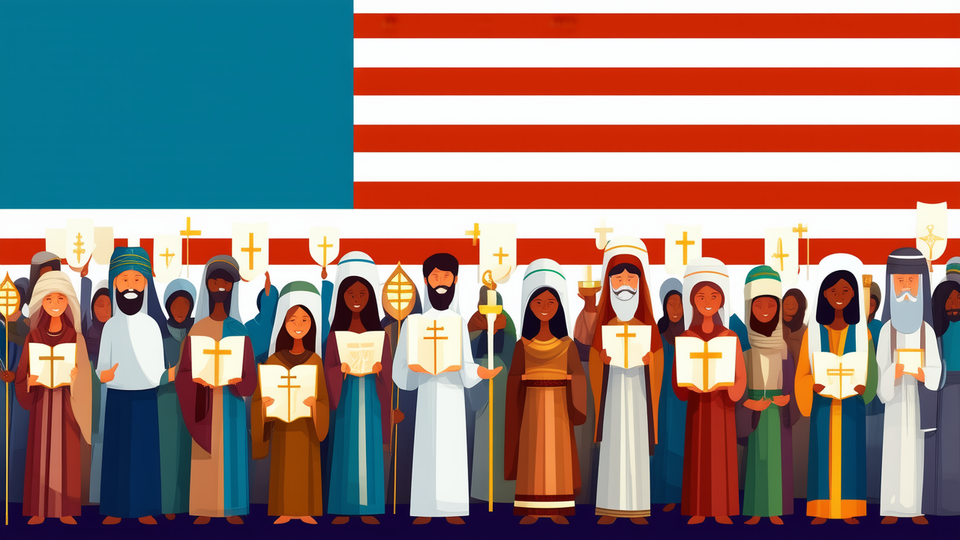
Survey Highlights Strong Preference for Religious Pluralism
The United States has marked its 250th anniversary, and a fresh public opinion poll provides a snapshot of how Americans view the nation’s religious makeup. Conducted online in early May, the survey asked more than 5,400 adults about their ideal vision for America’s religious identity.
Overall, 64% of respondents said they do not want the United States to be a primarily Christian nation. Instead, they favor a country where many different faiths coexist. This broad support for religious diversity cuts across political affiliations, age groups, and racial backgrounds, indicating a mainstream desire for an inclusive public sphere.
While the majority lean toward pluralism, a notable minority maintains a strong connection to Christian nationalism. The poll found that 94% of those who identify most strongly with Christian nationalist ideas consider being Christian essential to being truly American. This group represents roughly 11% of the adult population, showing that the movement, though vocal, remains a minority.
Religious affiliation also shapes preferences. 68% of white evangelical Protestants prefer a nation mainly made up of Christians, contrasting sharply with other religious groups that largely choose a pluralistic model. Hispanic Protestants are split, with just over half (51%) favoring a Christian‑majority nation. All other groups surveyed show a clear inclination toward a multi‑faith society.
Attitudes toward racial and cultural diversity mirror the religious findings. About 77% of Americans want the United States to be a nation made up of people from all over the world, a slight decline from the previous year but still a strong majority. However, believers in Christian nationalism—55% of adherents and 68% of sympathizers—are less likely to prefer this broad, multicultural vision, favoring a more homogenous national identity.
The poll also tracked changes in how Americans feel about Christian nationalism itself. Positive associations with the movement have risen among Republicans, now at 48%—up 12 points since 2022—while support among Independents and Democrats remains low at 25% and 17% respectively. Despite this shift in perception, the actual number of people who espouse Christian nationalist views has stayed relatively flat over the past four years.
Beyond religious identity, respondents expressed concern about the health of American democracy. Nearly seven in ten Americans believe that democratic rights and freedoms are under threat, and only 18% say they are extremely proud of how democracy functions today. These broader anxieties may influence how people view the intersection of faith and public life.
Historical perspectives on America’s special role also shifted. Support for the belief that God has granted the United States a unique place in history fell by more than 15 points to 44% overall. The decline was most pronounced among Democrats, dropping to 27%, while white evangelical Protestants increased their belief in a divine mission to 75%.
These findings illustrate a nation at a crossroads. On one hand, a clear majority of citizens desire a pluralistic religious environment that reflects the country’s diverse population. On the other hand, a persistent segment of the electorate continues to tie national identity closely to Christian belief, and their growing positive view of Christian nationalism could shape future policy debates.
Understanding these dynamics is crucial for policymakers, community leaders, and faith groups alike. The data suggests that efforts to promote religious tolerance, protect minority rights, and engage in open dialogue are essential for maintaining social cohesion as America moves forward.
In sum, the poll underscores a robust public preference for religious diversity, while also highlighting the continued influence of Christian nationalist sentiment among certain voter blocs. The challenge for the United States will be to balance these competing visions in a way that upholds the constitutional principle of religious freedom for all.





