2028 Presidential Unofficial Campaign: Early Speculation and Open Dynamics
2028 Presidential Unofficial Campaign: Early Speculation and Open Dynamics
While the 2028 U.S. presidential election formally begins after the November midterms, the unofficial race has been brewing for months. Public opinion polls, betting markets, and the shifting strategies of prominent Democrats illustrate a field that remains fluid and highly competitive.
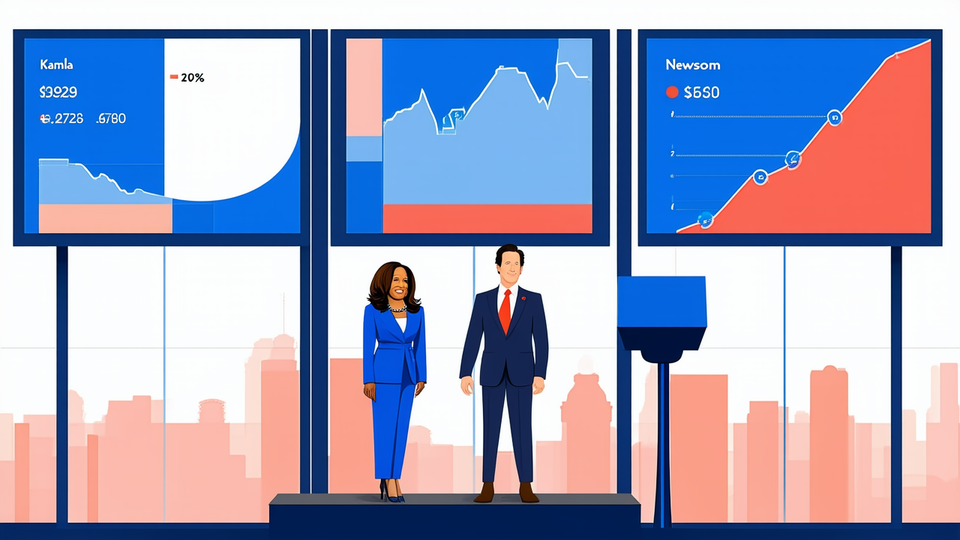
According to a recent Financial Times poll, former Vice President Kamala Harris leads the Democratic primary with 37% support. Gavin Newsom holds a distant 17%, followed by Pete Buttigieg at 8% and Alexandria Ocasio‑Cortez (AOC) at 7%. These figures align closely with other polls, confirming Harris’s status as the frontrunner among name‑recognizable candidates. However, the betting markets tell a different story.
Polymarket data shows Newsom as the favorite in Democratic betting markets with 24% odds, AOC second at 9%, Harris trailing at 8%, and other contenders such as Jon Ossoff and Pete Buttigieg with lower percentages. This divergence highlights how market participants value the perceived viability of candidates differently from traditional polling. One explanation involves concerns over Harris’s 2024 performance; many party activists view her campaign as flawed, which may temper enthusiasm among the base.
Despite poll‑market inconsistencies, the overall landscape suggests a highly open primary. The 2024 Democratic field featured more than two dozen declared candidates, and the 2028 race could mirror that level of competition. Candidates will need to broaden appeal beyond core constituencies, engage undecided voters in swing states, and withstand the scrutiny of a partisan media environment.
Across the aisle, the Republican side has seen less volatility. JD Vance is consistently ranked as the frontrunner both in polls and betting markets, maintaining a narrow lead over Marco Rubio. The alignment of polls and markets for Republicans points to a more predictable, if still contested, field.
Within the Democratic camp, Alexandria Ocasio‑Cortez remains the most uncertain figure. While her visibility and progressive record have mobilized a passionate base, her real interest lies in building a broad coalition that reaches beyond “deep‑blue” voters. Ocasio‑Cortez’s private discussions reveal a caution against framing her campaign as a protest venture; instead, she seeks to influence policy through legislative victories and strategic endorsements. Her run‑in‑the‑making tours, upcoming engagements with key state leaders, and active support for fellow candidates suggest she may pivot toward a broader national platform if she chooses to run for office.
Throughout the unofficial buildup, several dynamics shape the race. First, name recognition continues to be a major factor, with Harris and Newsom benefiting from national familiarity. Second, the growing competitiveness of the field will increasingly rely on grassroots mobilization and strategic endorsements. Third, political messaging that addresses both progressive ideals and pragmatic governance will be pivotal for candidates attempting to cross traditional ideological lines.
As November 2026 draws near, the 2028 presidential race remains in its unofficial stage but is already pulsing with strategic alignment and public speculation. Candidates who navigate the complex interplay of polling, betting markets, and audience expectations are most likely to thrive once the formal campaign season erupts.